




























































Verified Platforms
Quick Links
Where to Stay Secure
Thank you! Your submission has been received!
Oops! Something went wrong while submitting the form.


Your worst trade was not bad analysis. It was good analysis, executed by a worse version of you.
You can usually still defend the idea. The level was real, the invalidation sat where you said it would, and a friend shown that entry would have called it clean. The read had not changed. What changed was the size behind it, the twenty minutes you waited instead of two hours, and a loss from an hour earlier you had not finished feeling.
Trading psychology is the record of when that version of you arrives, what he does, and the marks he leaves in the account every single time. He is not an accident of one bad afternoon. He runs on a trigger.
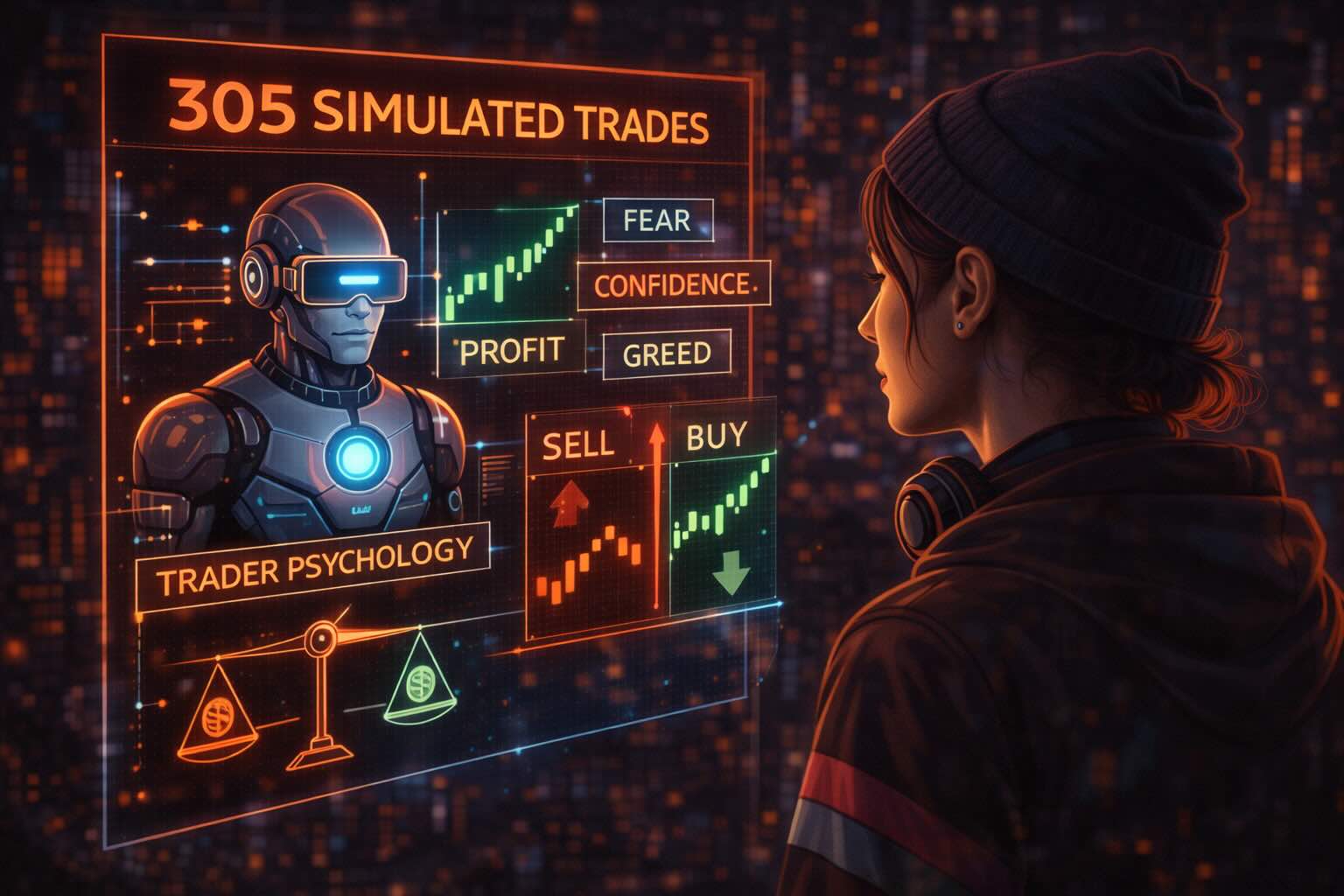
This walkthrough follows Tao, Kodex's bridge between structure and instinct, through the Trading Psychology panel in Pattern Intelligence. An Emotional Control gauge sits on top of it. Underneath sits a library of patterns read out of your own history: revenge after a loss, overconfidence after a win, fear that closes winners early, greed that holds losers late, and what a streak does to all four.
Tao does not open with the gauge. He opens with the trades that produced it, because the number on top is a summary and the behaviour underneath is the evidence.
The gauge never asks how you felt.
It measures distance: the gap between the decisions you make while your balance is sitting still and the decisions you make in the hour after it moves. Same account, same watchlist, same rules written down. If the position sizes diverge, if the time between entries collapses, if the exits start landing earlier or later than the plan says they should, then something changed between those two sessions, and it was not the chart.
That is what makes emotional control a measurement rather than a self-assessment. Ask yourself how disciplined you are and you answer from memory, and memory is a poor witness here. It keeps the trades that support the story you already hold about yourself and quietly drops the ones that argue with it. Pattern Intelligence reads the record instead, where nothing has been revised to sound better.
"Emotional control is not the absence of the feeling," Tao says. "You will feel all of it. The question is whether the feeling reached the size input."
Which is a lower bar than calm, and a much harder one to fake.
Because closing the position ends something, and what it ends is not the trade.
You are up. Not enormously, but up, and holding has started to feel like exposure instead of opportunity. So you take it off. The word you use is risk management, and the relief that lands two seconds after the fill is the giveaway, because a risk decision does not feel like relief. You did not manage the position. You closed a feeling.
Now run it backwards. A position is down, past the level where you said you would be out, and closing it would convert a floating number into a fact you have to own. So it stays open. You call it giving the trade room, and the account calls it a loss that got permission to grow.
Fear and greed get drawn as opposites, one making you sell and one making you hold. They are the same reflex aimed at two different open positions. Both are decisions about a feeling, taken through a trade, and in both cases the position is the instrument rather than the subject.
The pattern is old and heavily documented. Terrance Odean's 1998 study of 10,000 brokerage accounts found investors realising their winners at a markedly higher rate than their losers. The preference did not pay. The winners they sold went on to outperform the losers they kept holding. Behavioural finance files it under the disposition effect. Your account files it under Tuesday.
Fear and greed decide when you get out. The other two decide how much you put in, and they are the reason a single bad hour can cost more than a bad month.
Revenge is the easiest one to name. You are down, the next trade quietly acquires a job, and the job is not "be a good trade" but "make the last one stop existing." Size follows the job, because a normal position no longer covers the hole. The loop has a mechanism, and it runs on the same fuel as the rest of this panel.
Overconfidence is the one nobody flags, because it arrives during the good part. Four wins land in a row. Somewhere in there the wins get filed as skill and the losses before them get filed as conditions. The size climbs to match the new story you are telling about yourself. Nothing feels wrong at any point. It feels like you finally figured it out, which is the exact sensation the overconfidence effect describes: confidence in your own judgement running ahead of its measured accuracy.
Two triggers, opposite emotional weather, identical move. In both cases the position got bigger for a reason the chart did not supply.
"That is the first thing I look for," Tao says. "Not whether the size is large. Whether the size changed, and what happened to the balance just before it did."
Lay them side by side and the family resemblance stops being subtle.
| The pattern | What your balance just did | What you do | What it feels like | What the record holds |
|---|---|---|---|---|
| Revenge | Fell, realised | Size up, enter sooner | Conviction, urgency | Position size climbing as equity drops |
| Overconfidence | Rose, realised | Size up, shorten the checklist | Competence, finally | Size climbing with no change in setup quality |
| Fear | Rose, unrealised | Close the winner early | Prudence, taking profit | Average win shrinking below plan |
| Greed | Fell, unrealised | Hold the loser past the stop | Patience, giving it room | Hold time on losers stretching past winners |
Read the second column and there is only one event in the whole table: your balance moved. Read the column beside it and there are four different stories, each plausible, each arriving fully formed and pre-justified. The stories are what you experience. The right-hand column is what actually happened.
None of these are feelings that get detected. They are behaviours, which is precisely why they can be read at all. A feeling leaves no trace in a trade log. A position size does.
Six green trades in a row will change your behaviour more reliably than any single win ever does.
A winning streak inflates. Size drifts up, the checklist gets shorter, and setups you would have passed on last week start clearing the bar, because being right six times feels like evidence about the seventh. It is not. Runs of that length turn up in random sequences constantly, and the human read of them has a name: the hot hand, the belief that a run predicts the next outcome. Whether the effect holds anywhere is a live argument. Your account has no stake in it, and registers only that the sizing moved.
A losing streak does the opposite and costs the same. Discipline does not vanish all at once. The stop gets a little wider so it stops getting hit, then a little wider again, and the rule you wrote down becomes the rule you are currently negotiating with. By the fifth loss you are not running your system. You are running an edited version of it, revised under pressure, and no version of that has ever been tested.
Both traps form inside the run and pay out after it. The tell is not the trades in the streak. It is the first trade once the streak breaks, taken by someone who thinks it is over, while the state it built is still sitting there.
Tao runs the same read on both ends. "Show me the trade after the sixth win and the trade after the fifth loss," he says. "Those two tell me more about the account than everything in between."
Every one of these decisions arrives with a reason attached, and the reason is usually true.
The level really was there. The trade really had gone against you. You really were taking profit, and taking profit is a legitimate thing to do. Nothing in the moment presents itself as an emotional decision. The mind supplies the justification at the same speed it supplies the impulse, and the justification is the part that reaches you. What it leaves out is the pattern joining the decisions together, and that pattern does not live inside any one of them. It only exists across the set.
So the ledger outlives the memory. Your account holds the entry timestamps, the position sizes, the hold durations and the exits, in order, none of it edited afterwards to sound more reasonable. The behavioural read of a body of simulated trades tends to land on the same split: the story is about the market, and the record is about you.
The Trading Psychology panel is one of ten behavioural dimensions Pattern Intelligence tracks across a simulated history, sitting alongside risk tolerance, time horizon and trade frequency. It does not grade your character. It reports which of the four patterns your own trades keep producing, and when they show up.
Put two accounts on the same entry. Same size, same invalidation, same twenty minutes of the position moving against both of them.
One takes the loss where the plan said to take it, closes the platform, and comes back tomorrow with a balance 1% smaller and a process fully intact. The other widens the stop, then adds, then trades again inside ten minutes to get it back, and finishes the day 9% down on a position that was never in the plan. The market treated them identically. It printed one sequence of candles into two very different accounts.
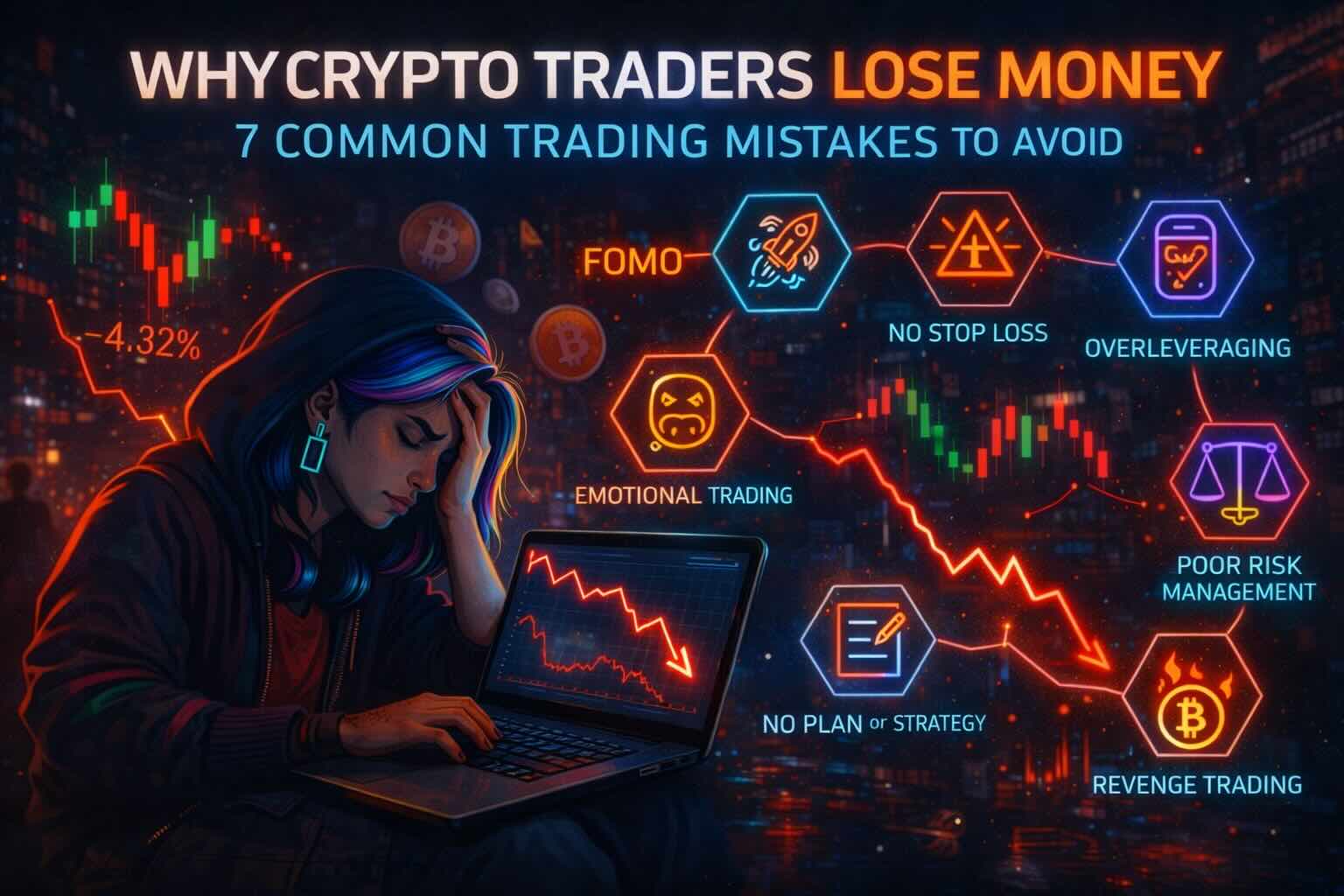
That is the case for reading this panel before you buy another indicator. Your read of the chart decides what happens on the trades that work. Your state decides what happens on the trades that do not, and those are the ones that set the size of the account. The common crypto trading mistakes cluster there, in the reaction, not in the analysis.
You cannot delete the reaction, and Tao would not want you to. The discomfort after a bad loss is doing something useful, and a person who feels nothing when an account drops 9% is not disciplined, only detached. What you can do is see the fingerprint before it costs you the next account. That is the entire reason for having it read back.
Which of the four showed up the last time your balance moved against you? You will guess, and your record will not have to. The Trading DNA read pulls your emotional pattern out of your own trade history in about two minutes with no signup. Then go make a fresh one. Take a loss on purpose in the simulator and watch what you do on the very next entry. The balance is $5,000 of paper, so the only thing the answer costs you is the discomfort of having it.