

























































































You're not losing to the market. You're losing to yourself.
© 2026 Kodex Academy · Education, not financial advice. The Kodex crew are fictional personas.
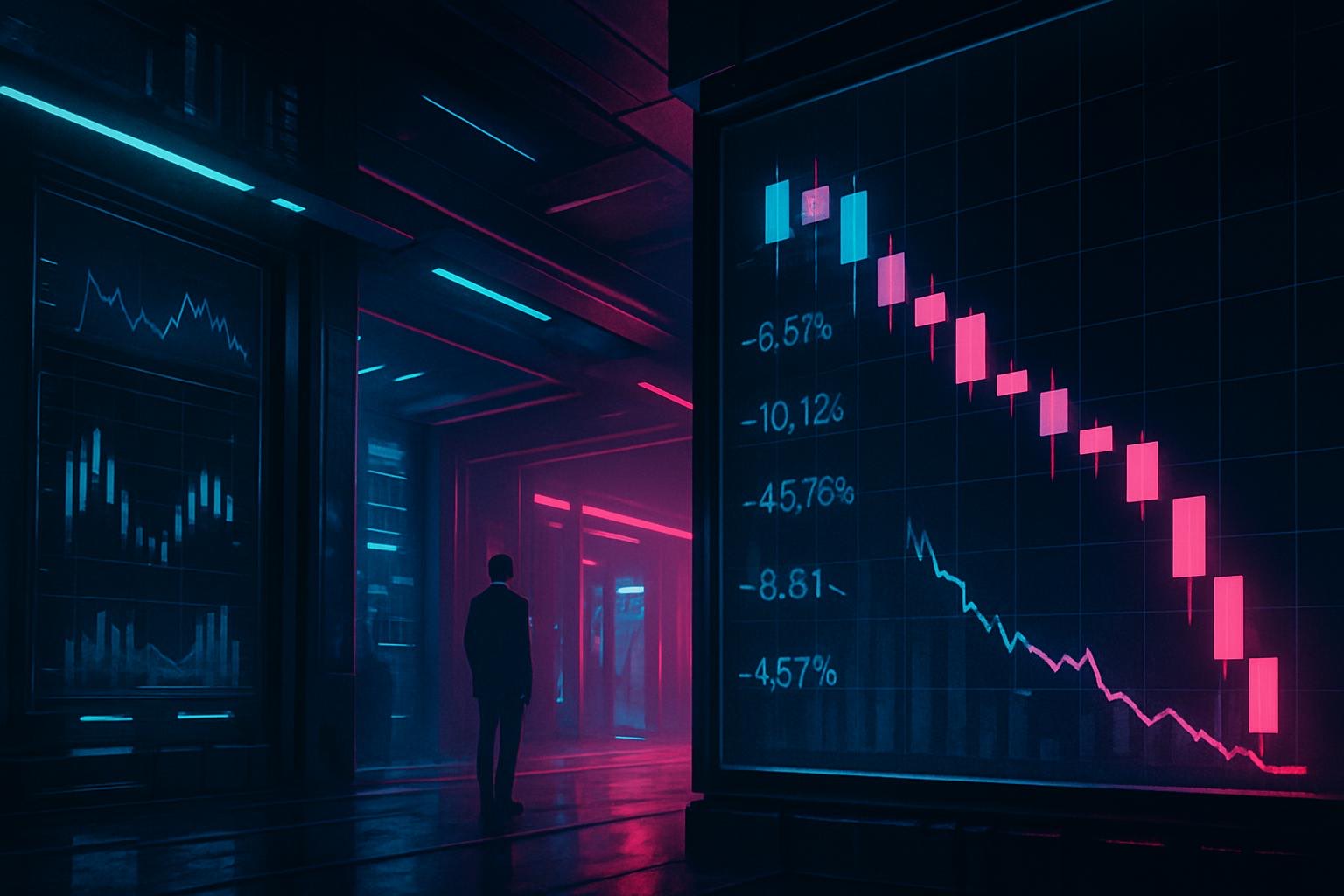
Netflix beat on earnings and the stock fell almost nine percent in a single morning. Those two facts are not fighting each other. Read correctly, they are the same fact.
A stock drops after good earnings for one reason more often than any other: the good part was already expected, and price only pays for what the market did not see coming. The report is not the news. The gap between the report and the expectation is the news.
That gap is the entire trade.
Tao is at the desk for this one. He is Kodex's bridge between structure and instinct, closer to student than master, and he learned to read an earnings report sideways, coming to stocks from crypto, where the same reflex wears a different name. What he wants you to see is small and stubborn. The number a company prints is old the second it prints, because the price already spent weeks guessing it.
Tao does not start on the headline. He sets two columns down: what the market expected, and what actually arrived. Then he studies the space between them, because that space is where the money moved.
On July 17, Netflix reported second-quarter revenue of $12.56 billion and earnings of $0.80 a share (CNBC). The street sat near $12.59 billion and $0.79. Revenue landed a hair light, earnings a penny better. Call the quarter in line. A quarter that lands on top of the estimate is not a surprise.
It is a receipt.
Receipts do not move price. They were bought weeks ago, on the way up, by the run that anticipated exactly this.
A crypto reader feels this before anyone draws the diagram. You have watched Bitcoin grind higher for a month into an ETF approval, then sell the day the approval is real. Nothing broke. The event the tape had been waiting for simply arrived, and the money that bought the rumor left on the fact. Netflix ran the same play on an earnings date instead of an ETF approval.
Tao puts it as a rule. "Price reacts to the surprise, not the number," he says. "If the number was expected, the number is not the event."
There is a second layer under the published estimate, and it is where the penny beat quietly died. Consensus is the figure printed on the screen. Sitting above it is the whisper: the higher bar that positioning, buy-side models, and the run-up itself had already assumed. When a stock has climbed for weeks, the real expectation is not the analyst estimate. It is the optimism baked into the price on the way in. Clear the printed bar, miss the whisper, and the beat reads as a letdown. The scoreboard everyone quotes is not the scoreboard the price is keeping.
By the time a company confirms good news, the confirmation has had weeks to become the base case. The move you could trade already happened while the crowd was still waiting for the proof.
The same week made the point twice more. TSMC and Tesla both reported beats and both fell, on soft margins and shaky delivery math. Three different businesses, three green headlines, three red screens. When a pattern shows up across unrelated names in the same week, it is not about any one company. It is about how price treats news it already owns.
Because a stock is not priced on the quarter that just closed. It is priced on the four that have not.
The guide is where a company tells you what the next quarters look like from the inside, and Netflix's guide is where the damage was. It steered third-quarter revenue to $12.86 billion, growth of about 11.7 percent, when the street wanted closer to $13 billion. It put earnings guidance at $0.82 against roughly $0.84 expected (Variety). Small misses on their own. Together, a future revised down. The quarter is history.
The guide is the position you are actually buying.
A stock that has run hard is priced for perfection, and perfection has no upside surprise left in it. From there, in line is a letdown and soft is a sell. You do not need a terminal to see the bar. The chart into the print is the whisper made visible: a name that rallied hard into earnings has already voted, and the report has to clear the optimism, not the estimate.
Tao lays the numbers in a grid, because a gap is easier to feel when both sides sit next to each other.
| Metric | Expected | Delivered | What the market read |
|---|---|---|---|
| Q2 revenue | ~$12.59B | $12.56B | in line, no lift |
| Q2 earnings | $0.79 | $0.80 | a penny better, shrugged off |
| Q3 revenue guide | ~$13.0B | $12.86B | growth cooling to ~11.7% |
| Q3 earnings guide | $0.84 | $0.82 | forward margin a touch soft |
| Engagement report | twice a year | annual from 2027 | less to verify them with |
Read only what Netflix delivered and nothing looks broken. Set each delivered figure beside what was expected and the sell-off stops being a riddle. Every line that carried weight pointed slightly below what had already been paid for.
Even the full year offered no rescue. Netflix narrowed 2026 revenue to a range of $51.0 to $51.4 billion and held its operating margin near 31.5 percent, steady rather than raised. A guide that only holds the line gives a stock that already priced acceleration nothing fresh to buy.
A good number sells off when the number was the plan and the outlook is the surprise. The beat you are staring at belongs to a quarter that is already closed.
The bottom row is the one that should stop you. That one is not a number. That one is a decision, and it is the tell.
The bottom row is what turned a soft guide into a nine-percent morning.
Alongside the numbers, Netflix said it will publish its "What We Watched" engagement report once a year instead of twice, starting in 2027, and framed the change as focusing on the metrics that decide value: revenue, profit, free cash flow (The Motley Fool). A clean story, on paper. The market did not hear focus.
It heard a dimmer switch.
The mechanism is older than streaming. When a company hands you less of the data you use to check its story, your uncertainty about that story rises. Higher uncertainty is a bigger discount on the same future cash. The stock does not fall because engagement fell. Viewing hours actually grew about two percent in the first half. It falls because your ability to audit that engagement just got thinner, and price pays less for a claim it can no longer test. Withdrawn disclosure is not neutral; it is priced as risk.
You can measure the size of it in the reaction. The engagement change did not move a single dollar of the quarter that just closed. It changed only how much you will be allowed to see going forward, and the stock dropped on it anyway. That is the market saying out loud that visibility has a price, and that giving some of it back costs real multiple.
Tao has met this exact move in crypto. A protocol that stops publishing its reserves. An exchange that goes quiet about withdrawals right when you want to hear from it. The information going dark is itself information, and rarely the good kind. He reads it the same way in both markets. When they choose to show you less, price the discount. Do not extend the benefit of the doubt for free.
An equities report should feel less foreign after this, not more. You already own the instinct that reads it.
Buy the rumor, sell the news is the whole engine. A token runs into its listing and dumps on the open. A coin climbs into its halving and bleeds the week after. It is the airdrop that peaks the hour it hits wallets and the mint that tops on reveal. Bitcoin grinds up into the spot-ETF approval and hands the move back once the approval is real, which is exactly what reading ETF outflows as plumbing rather than a headline trains you to expect. The asset keeps changing. The mechanism does not.
Netflix is that same shape with a ticker where the contract address goes. The run-up prices the expected good news, and the report confirms it. The money that was waiting on confirmation walks. What looks unhinged from the outside, a good number and a red candle, is just an expectation getting paid out and closed.
An earnings date is a scheduled catalyst, the same species as a token unlock or a halving. Scheduled catalysts are the ones likeliest to be fully priced before they land, which is why the calendar event so often disappoints on the day it finally arrives.
Tao makes the crossing concrete. On Kodex you can hold tokenized stocks beside Bitcoin in one account, on one screen. The point is not the novelty of a stock on-chain. The point is that the reflex you built dodging token-launch dumps is the identical reflex that keeps you from buying a stock the morning its beat prints and its guide slips.
It is one instinct, and only the ticker on the screen changes.
You are not learning a new game here. You are renaming one you already play, and the crypto version probably taught it to you on a faster, more brutal clock than any earnings calendar will.
The next time a company you follow reports, give the headline a minute before you trust it.
Start with the delta, not the level, because a beat that was already expected is not a beat that pays. Find what the street had modeled, then measure the distance from it. The distance is the news, and sometimes the distance is negative even when the headline is green. You can pull the modeled number from any earnings preview, and you can read the run-up straight off the chart before the bell.
The guide matters more than the quarter behind it. The report tells you what already happened. The guide tells you what the company expects to happen next, and price weighs next far more heavily than now. A soft outlook can sink a strong quarter, and more often than the headline suggests, it does.
Then there is what went quiet. Fresh disclosure builds trust and tightens the discount. Withdrawn disclosure widens it. When a company suddenly shows you less, price the uncertainty, not the reassurance wrapped around it.
Whether Netflix is cheap or dear is not Tao's call to make, and not Kodex's. The lesson sits upstream of any single name: a good number sells off when the good number was already the plan and the outlook is the part nobody had. Learn to read the gap and the guide, and "this makes no sense" quietly becomes "of course." That shift is the edge, because it holds through the next print and the one after it. The same discipline that keeps a red earnings morning from turning into a month of chasing is the whole point of the survival framework.
The market never pays you for the quarter that happened. It pays you for the one nobody had priced yet.
Put the read to work where being wrong costs nothing. Open the simulator, buy a tokenized stock the session before its next earnings or a scheduled catalyst, then sit through the print and see whether the move tracks the number or the guidance around it. The capital is fake. The flinch when a green beat opens red is the real thing you came to study.