




































Verified Platforms
Quick Links
Where to Stay Secure
Thank you! Your submission has been received!
Oops! Something went wrong while submitting the form.

A token can sit on top of one of the busiest exchanges in crypto and earn nothing from it. For years, that was the deal. Billions in swaps moved through Uniswap, and every cent of the fee went to the people supplying the liquidity, not to the token named after the protocol. So when UNI jumped in early July on the news that it would power Robinhood's new chain, the number on the screen was the least interesting part. The question worth asking was quieter. Does the UNI token earn fees now, or is this one more pop sitting on top of the same hollow structure?
Six months ago the honest answer was no.
That has changed.
What changed is not quite what the price story says.
This is a Kodex walkthrough with Ava. She reads structures instead of headlines: where pressure gathers, where value actually settles once the noise clears. She is going to walk you through the fee switch behind the jump, and give you the honest answer to whether the UNI in your wallet now has a claim on the protocol it votes on.
Ava does not open the price chart. She opens the path a single swap fee takes, and asks you to follow it to the one point that decides everything: where the money either reaches the token, or stops just short of it.
Start with what you actually owned.
Before December 2025, a UNI token was a vote. It let you weigh in on governance proposals, nothing more. It gave you no share of what Uniswap earned. When someone swapped a thousand dollars of ETH for USDC, the fee on that trade went entirely to the liquidity providers who funded the pool. The protocol collected nothing for the token. That is the classic shape of a governance token: it hands you a say, not a claim on revenue.
Sit with how strange that was. Uniswap was one of the most-used pieces of software in the industry. Tens of billions in volume ran through it every month. And the token attached to it captured, in cash terms, none of that activity.
You did not own a slice of the business. You owned a ballot.
Ava calls this the gap traders stopped noticing. The usage was enormous, the value capture was zero, and because the token still traded at a price, the gap hid in plain sight. A wildly used protocol whose token earned nothing from the use.
The problem was not that the protocol lacked users, but that all of them paid the token nothing.
That was the arrangement the fee switch was built to close.
Here is what actually flipped.
The upgrade is called UNIfication, and it passed governance on December 25, 2025, with more than 125 million UNI voting in favor. It went live with a one-time burn of about 100 million UNI from the treasury, worth roughly 600 million dollars at the time, trimming total supply from around 1 billion toward 895 million. In February 2026 it expanded across more chains. It is live now, not a proposal.
Follow the money the way Ava does. You swap on Uniswap. The fee you pay as a user did not go up, not by a cent. But a portion of the protocol's cut, somewhere between roughly a sixth and a quarter depending on the chain, no longer sits idle. It routes into a single vault contract on each chain called TokenJar.
Then comes the part that gives the token its claim. Value can only leave TokenJar one way: by burning UNI through a second contract called Firepit. No treasurer signs off. No governance vote is needed to keep it running. Fees flow in, and the only exit door is a permanent UNI burn.
That is the link that did not exist before. Protocol usage now reaches straight through to the token's own supply. Every swap that generates a protocol fee ends, eventually, in fewer UNI existing than before it.
This is not a promise to pay holders, but a mechanism that quietly deletes tokens as the protocol gets used.
This is the part to slow down on, because it is the easiest thing in the whole story to misread.
When people hear that a token "earns fees now," they picture a dividend: revenue arrives, and a slice lands in your account like interest. That is not what a burn does. A burn puts nothing in your wallet. It removes tokens from existence. You are not paid. The pool of UNI simply gets smaller.
The distinction is easy to lose, because a dividend and a burn both sound like the token finally winning. They are not the same thing. A dividend is money in. A burn is supply out.
You benefit in one indirect way, and only one. If the count of UNI keeps shrinking while demand for it holds or grows, each remaining token stands for a larger share of a scarcer asset. That is real. It is also conditional. Scarcity does nothing for you if demand falls faster than supply does. The burn is not a paycheck, but a tailwind.
Ava puts it flatly. You are not being paid. You are being concentrated.
Hold the two versions of UNI side by side and the change gets concrete:
| Governance-only UNI (before) | Fee-switch UNI (now) | |
|---|---|---|
| Where the swap fee goes | 100% to liquidity providers | Same fee to LPs, plus a share of protocol fees into TokenJar |
| The token's claim on revenue | None | Protocol fees burn UNI through Firepit |
| How you benefit | A vote in governance | Scarcity as supply shrinks, if demand holds |
| What a big new integration adds | More volume, nothing reaches the token | More volume, more fees feeding the burn |
That capture is new. It is also slower than it looks.
Now the Robinhood piece fits, and Ava puts it where it belongs: not next to the price target, but under the mechanism.
Uniswap is the native automated market maker on Robinhood Chain, the Arbitrum-based Layer 2 whose public mainnet went live on July 1, 2026. In plain terms, swaps happening inside Robinhood's new chain route through Uniswap, which means they generate protocol fees, which means they feed TokenJar and burn UNI. That is the plumbing under the jump. Every new venue pushing volume through Uniswap now turns into a little more UNI destroyed. The connection between the partnership and the token is genuine, and it runs through the burn.
So measure it, because a genuine link and a large one are different claims.
In its first weeks the switch has generated protocol fees at an early annualized run rate somewhere in the twenties of millions of dollars, a figure Talos extrapolated from a short window rather than a settled year. That translates to roughly 4 to 5 million UNI burned per year. Depending on the fee figure and the supply base you use, that lands between about 0.4% and 1% of UNI's supply annually. The burn shrinks the real supply in circulation, but set against UNI's market cap in the billions, a fraction of a percent a year is a drip, not a flood.
Ava wants you to feel both facts at once. The link is real. The pace is not dramatic.
A protocol integration does not mechanically multiply a token by burning half a percent of it a year. It bends the supply curve down, gently, for as long as the volume keeps coming.
Picture it over years, not over a single green candle. A burn near half a percent a year, holding steady, takes roughly a decade to remove even 5% of the supply. That is inflation quietly neutralized and a faint tailwind for price if buyers keep showing up. It is not the shape of a token that runs up fortyfold on its own. The design is patient on purpose. Supply thins the way a coastline wears back, not the way a match burns down. Which is exactly why the size of the burn matters more than the fact of it, and why the next question is the one that travels.
This is the question worth taking with you, long after the UNI headline is stale.
Every token tells a story about value. The only thing that decides whether the story is real is where it ends: at the token, or somewhere before it. So Ava has you run one check, the same one every time, on UNI today and on the next thing you are tempted to buy.
Where does the protocol's revenue actually land? Trace it. Does a share reach the token through a burn, a buyback, a staking reward, or a direct fee split? Or does it stop at the liquidity providers, at the company behind the protocol, at a treasury the token has no call on? For UNI before December, the honest answer was that it stopped at the LPs. For UNI now, a slice reaches the token through the Firepit burn.
Then size it. A mechanism that feeds value back to the token is only as strong as how much value, measured against how large a market cap. A burn touching 0.5% of supply a year is a different fact from one touching 10%. Name the number, not just the mechanism.
Run those two questions and the tokenomics claim answers itself. The fee either reaches the token, or it does not. The amount is either meaningful against the price, or it is decoration.
Yes, with the weight on the word new.
For the first time, there is a real line connecting Uniswap's usage to the UNI token, and it runs through a contract nobody can switch off by decree. That is a genuine change in what the token is. Six months ago the line did not exist at all.
But a line is not a forecast. Standard Chartered's Geoff Kendrick projected 6.50 dollars for UNI by year-end and 100 dollars by 2030, a near-fortyfold climb, and reads the Robinhood integration as a deeper deal than the market has priced. That is a sell-side projection built on assumptions about how much DeFi grows, not a fact about where UNI is going. The burn math does not carry you to 100 dollars on its own. It carries you a slow, real reduction in supply that pays off only if demand shows up to meet it.
The switch answered one question cleanly. Your UNI finally holds a claim on the protocol it governs. What that claim is worth is a separate question. Ava will not tell you whether to hold it; she will tell you what you are holding, and hand the pricing back to you. That is the same discipline the Survival Framework brings to any position: read where the value actually lands before you price in anyone's target.
Since the December 2025 UNIfication upgrade, yes, indirectly. A share of Uniswap's protocol fees now routes into a per-chain vault called TokenJar, and that value leaves only by permanently burning UNI through the Firepit contract. Before that upgrade, swap fees went entirely to liquidity providers and the token earned nothing from the volume.
It is the mechanism, activated by the UNIfication proposal, that turns on protocol-level fees and points them at a UNI burn. Swap fees for users did not change. What changed is that a portion of the protocol's share now feeds an automatic, ongoing token burn instead of leaving the token with no claim on revenue.
No. A burn removes tokens from circulation; it does not deposit anything in your wallet. You benefit only if the shrinking supply meets steady or rising demand, which makes each surviving token a larger share of a smaller pool. It is not income, but scarcity.
Robinhood Chain going live with Uniswap as its native AMM was one catalyst, alongside a Standard Chartered price note, and it is the one that ties to the fee switch: more volume through Uniswap means more fees burning UNI. The price move had several drivers, so treat the integration as the mechanism story, not the sole cause of the pop.
It is one analyst's projection, not a number to bank on. Standard Chartered's staged path to 100 dollars by 2030 rests on assumptions about DeFi's overall growth. The fee switch gives UNI a real value-accrual link, but at a burn of roughly 0.4% to 1% of supply a year, the mechanism itself is a slow drip rather than a guaranteed path to a fortyfold gain.
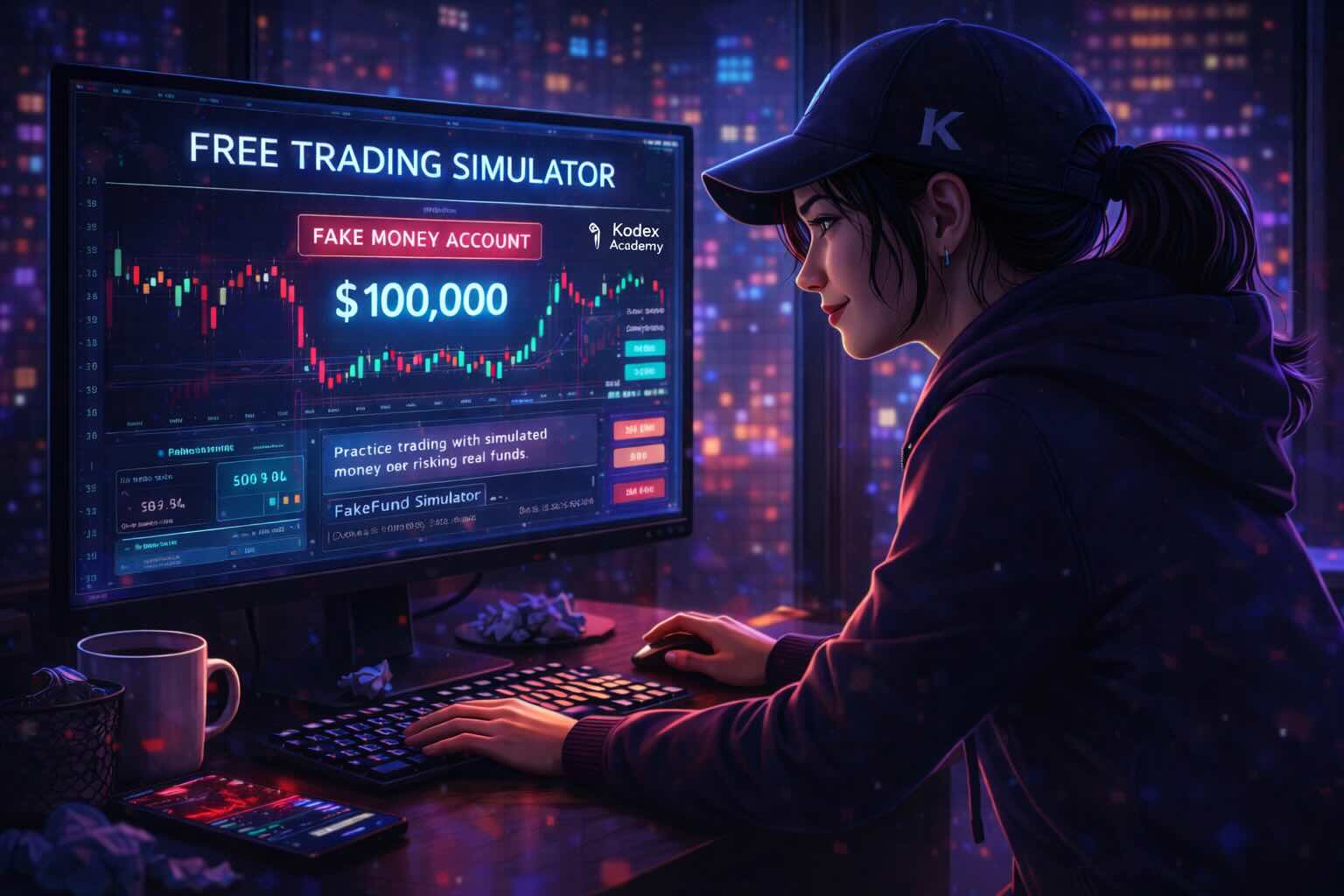
Buy UNI on a practice account right after a catalyst like the Robinhood listing, then hold it and watch your balance sit still: a burn deposits nothing, so no fee ever arrives. What moves your position is price alone, riding a supply that thins less than one percent a year, so put that slow drip next to the size of the pop you just paid for. The dollars are simulated. The habit you keep is tracing where value actually lands before you buy.