




































































Verified Platforms
Quick Links
Where to Stay Secure
Thank you! Your submission has been received!
Oops! Something went wrong while submitting the form.


TVL does not measure risk.
It measures how much capital is sitting inside a protocol's contracts. That number tells you something about adoption. It tells you nothing about what that capital is exposed to, who is on the other side of the trade, or what happens to the pool when volatility hits.
Polynomial Protocol processed $1.2 billion in derivatives volume before shutting down. The TVL looked healthy. The fees looked competitive. The yield looked real. What was not visible — not from the dashboard, not from the docs, not from the audits — was the structure underneath. Concentrated liquidity pools. LPs underwriting counterparty risk without adequate capital buffers. No visibility into actual exposure.
This is about how on-chain derivatives protocols present risk — and what to read instead of TVL.
Total Value Locked became the default metric for evaluating DeFi protocols. Higher TVL signals trust, adoption, liquidity depth. Aggregators rank by it. Analysts cite it. Traders use it as a proxy for safety.
The problem is what TVL leaves out.
A protocol with $500 million in TVL and concentrated liquidity pools has a fundamentally different risk profile than one with $500 million and diversified, isolated pools. The number is the same. The structure underneath is not.
In on-chain derivatives, this gap gets dangerous. Liquidity providers are not just depositing capital — they are becoming the counterparty to every trade executed against the pool. When a trader opens a leveraged long and the price moves against the pool, the LP absorbs the loss. The yield the LP earns is not passive income. It is compensation for underwriting that risk.
TVL shows the deposit. It does not show what the deposit is doing.
In traditional derivatives markets, the counterparty relationship is explicit. A clearinghouse sits between buyer and seller. Margin requirements are calculated, monitored, enforced. When a position moves against a participant, the margin call is visible and immediate.
In on-chain derivatives, the relationship is implicit.
The LP deposits capital into a pool. The pool provides liquidity for leveraged trades. When a trader profits, the pool pays. When a trader loses, the pool collects. The LP's return is the net of all trades executed against their capital.
This is not yield farming. This is market-making with directional exposure — and in most on-chain derivatives protocols, the LP has no visibility into the aggregate position of the pool, no ability to hedge, and no circuit breaker when exposure concentrates.
Polynomial's LPs discovered this during a volatility event. The pool's net exposure shifted. Capital buffers were insufficient. Liquidation mechanics could not unwind positions fast enough.
The LPs had been earning yield. They had also been writing what amounts to naked options on the pool's solvency.
The yield was the premium. The shutdown was the exercise.
Three structural features determine whether an on-chain derivatives protocol can survive stress. None of them show up in TVL.
Liquidity pool concentration. How many pools exist? How is capital distributed across them? A protocol with one large pool concentrates all counterparty risk in a single structure. Isolated pools per trading pair distribute risk — a loss in one pair does not drain capital from another. Polynomial used concentrated pools. When losses came, everyone shared them.
Oracle dependency. On-chain derivatives require price feeds. When prices move fast, oracle latency creates windows where the protocol's internal price diverges from the market. Traders who exploit these windows extract value directly from the pool. The LP pays. How much value leaks during volatility depends entirely on oracle quality and speed — and most protocols do not publish this data.
Liquidation engine design. This is the question that only matters under stress: when multiple large positions need closing simultaneously, can the protocol handle it? How fast? In what order? Polynomial's liquidation engine could not process correlated liquidations at the speed required. The cascade overwhelmed the system.
Pool structure, oracle quality, liquidation mechanics. These are the load-bearing walls. TVL is the number on the front door.
If TVL is not the right metric, what is?
Not a single number. A set of structural questions any trader should answer before depositing capital into an on-chain derivatives protocol.
What is the pool structure? Concentrated or isolated? If concentrated, all positions share the same capital buffer. If isolated, losses in one market do not drain liquidity from another. This is the single most important structural feature. It is rarely visible on the protocol's marketing page.
What oracle does the protocol use? Chainlink, Pyth, custom feeds? What is the update frequency? What happens during network congestion when oracle updates slow down? That tells you how much leaks during fast moves.
What are the liquidation mechanics? Can the protocol handle correlated liquidations across multiple positions? Is there a backstop — an insurance fund, a treasury reserve, a socialized loss model? If the backstop is the LPs themselves, the capital buffer is circular. The money supposed to absorb losses is the same money that would be lost.
Most protocols do not show the pool's net exposure. If LPs cannot see the aggregate directional position in real time, they are underwriting risk they cannot size.
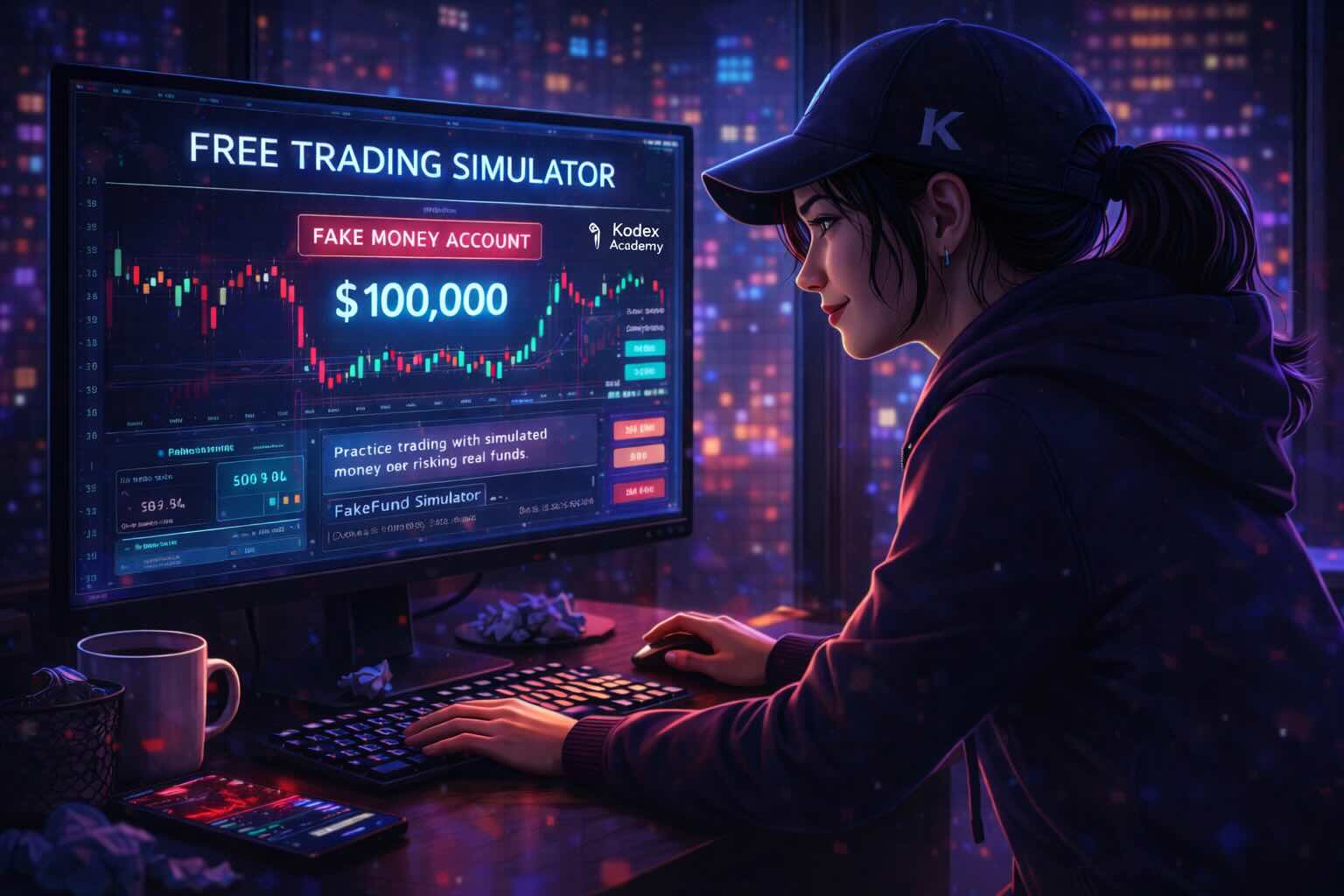
The Market Simulator lets traders practice derivative positions without real capital. The Risk series covers the framework for protocol-level risk — the structural questions that matter before capital moves.
The critique is not that on-chain derivatives are bad.
The critique is that the metrics used to evaluate them are wrong.
TVL became the standard because it is simple, comparable, and always available. Simplicity is not accuracy. A high TVL protocol with concentrated pools, slow oracles, and untested liquidation mechanics is structurally more fragile than a low TVL protocol with isolated pools, fast oracles, and tested liquidation design.
The market rewards the first. It should reward the second.
Polynomial processed $1.2 billion in volume. The TVL was visible. The structure was not. The capital disappeared when the structure failed.
The lesson is not to avoid on-chain derivatives.
Stop reading the dashboard. Read the architecture.
Open a leveraged derivative position in the Market Simulator and hold it into a sharp price move, the exact moment this article is about. Watch how the liquidation engine closes it, at what speed and in what order, the mechanics that never show up in a TVL number, while a pool of LPs sits on the other side absorbing the outcome. None of the balance is real, so you can let the position fail on purpose and study what actually breaks instead of a dashboard figure.