
















































































Verified Platforms
Quick Links
Where to Stay Secure
Thank you! Your submission has been received!
Oops! Something went wrong while submitting the form.


Knowing revenge trading is a mistake does not stop it. The knowledge is there, the conviction is real, and still, after the wrong loss at the wrong moment with just enough emotional charge behind it, the next trade opens without a thesis. The one after that opens faster.
That's why revenge trading is worth describing more precisely. Not as a lapse in discipline, but as a loop. And loops don't break because they're understood in theory; they break when something interrupts them early enough that the feeling never gets the chance to dress itself up as a reason.
This piece shows what that loop looks like from the inside, why it keeps running even when the mechanism is already familiar, and the one structural move that interrupts it before it builds momentum. Not willpower. Not a lecture. A pattern you can feel and catch.
We follow Eunha through a session where the loop begins, tightens, and once does not finish. If you've been through the Cryptopsyche series, you already know her. This is another part of the map.
A loss hits the body before it reaches language. Heart rate changes, attention narrows, and the system begins shifting away from calm evaluation toward immediate correction. That isn't weakness; that's how threat response works. The body doesn't need a philosophical interpretation before preparing for action.
That's where the danger begins. Because "act" under stress doesn't mean plan. Act under stress means restore, fix, remove the discomfort, recover the balance that was just disturbed.
In trading, that restoration fantasy usually takes one very specific form: get it back, now, on the next trade, before the session ends.
Here's the loop in its simplest structure: loss, threat signal, urgency to restore, trade without thesis, second loss, amplified urgency, trade again. Each cycle runs faster than the last. Position size starts drifting, setup quality starts degrading, justification starts thinning. By the third trade, the market is no longer the real object of attention. The loss is.
Once that happens, the order isn't being opened in response to structure. The order is being opened in response to an unresolved state. The market doesn't care about that state, which is exactly why the loop gets more expensive the longer it runs.
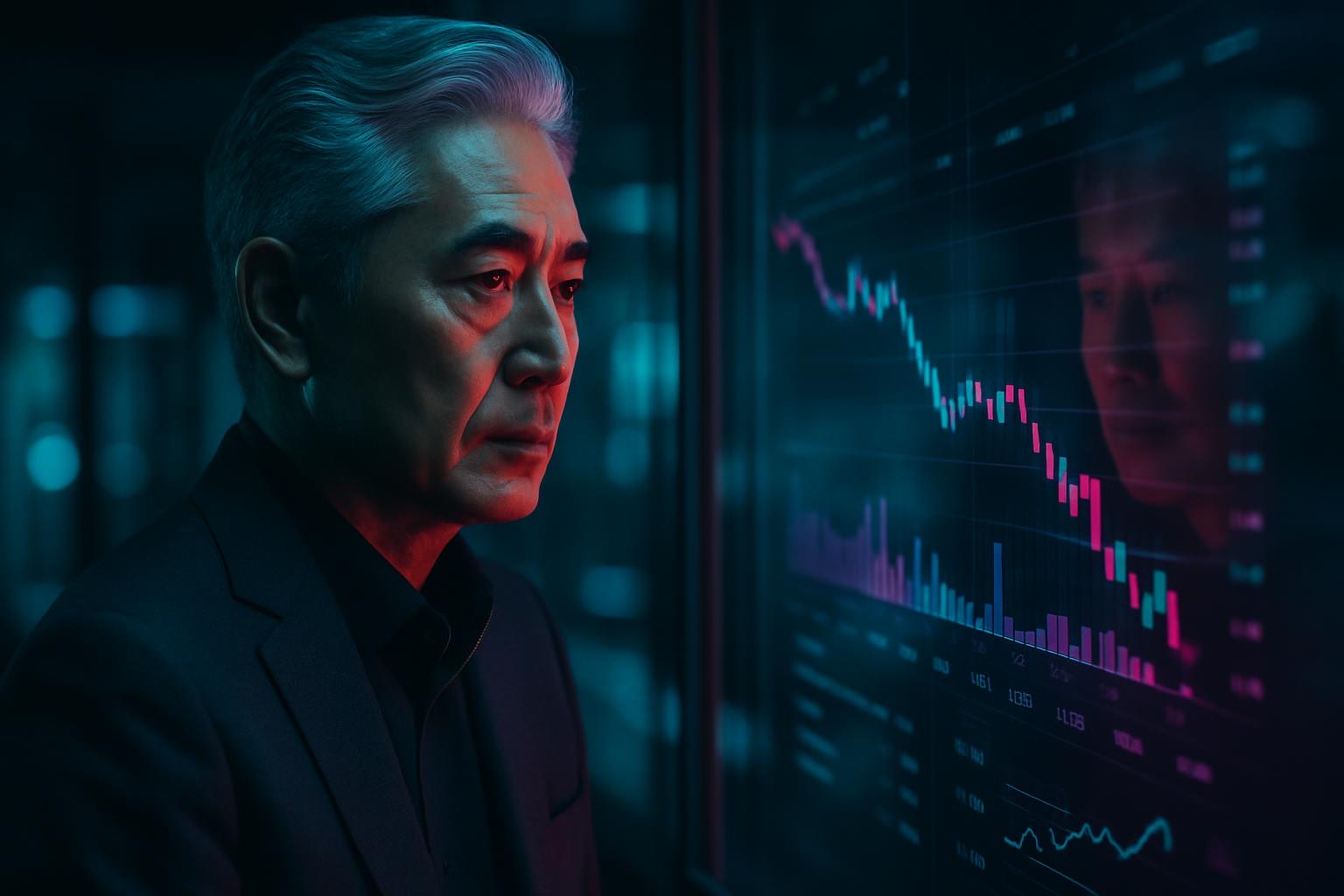
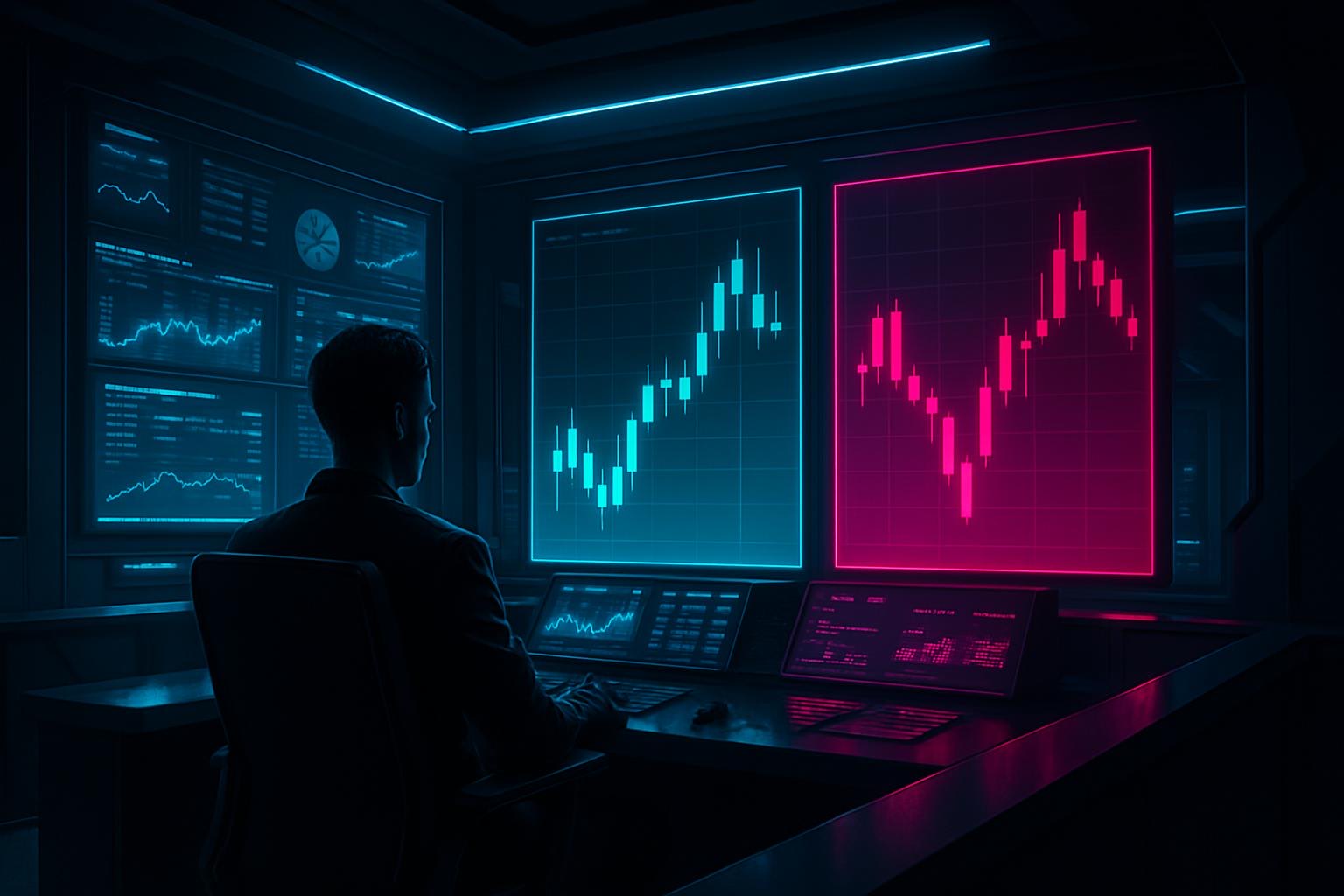
Eunha closes the trade. Minus 1.2%. Not catastrophic. Sessions have absorbed worse without trouble. But this one lands differently because the setup had been rated highly, the confirmation was there, and the process had been followed. Still: red.
She stares at the chart. The candle that took her out sits there, finished and indifferent, offering nothing back.
Fine. Next setup. She opens the screener. A token with momentum is moving fast, not her usual structure, but the volume is there. She tells herself this is just observation. Then the position opens. The loop has already started, even though nobody has named it yet.
Price moves against her almost immediately. She adds to the position. The reasoning arrives right on time: the token is stretched, should revert, the initial entry was only early. Price doesn't revert. She closes at minus 2.1%.
Now the session has changed shape. The first loss hurt; the second loss sharpens. The chart of the original trade comes back up, not for review but for argument. If the stop had been two ticks wider. If the entry had been delayed. If the market hadn't wicked that exact level.
This is where the loop tightens. The mind is no longer revisiting the past to learn from it but to construct permission for the next trade.
The setup was right. The market was wrong. One clean trade fixes this.
That sentence is the tell. Fixes this. Nothing is being fixed. There's no money sitting inside the market waiting to be retrieved. The previous loss is closed, the capital gone. The only thing available now is a new trade with its own structure, its own risk, and its own conditions.
None of that matters to the loop. What the loop wants is symmetry. A loss that size seems to require a win that size, quickly, preferably before the emotional weight of the session settles.
Eunha opens a third position.
There's a version of Eunha that understands exactly what is happening. She has read the framework, she knows the tightening feeling, she can describe the sequence accurately: emotional activation, urgency, distorted evaluation, impulsive re-entry. She could name the mechanism while it's happening.
Still, the next trade can open anyway.
That's the important part. Understanding the loop isn't the same thing as interrupting it. By the time the mechanism is being explained internally, the body may already be moving toward action. The urge arrives first. Language often arrives second, and when it does, it tends to arrive as justification rather than interruption.
Revenge trading survives insight because the loop runs faster than analysis. A better explanation doesn't stop a live pattern that has already reached the hands.
Ava puts it more cleanly than most psychology language does: "The trap is waiting for clarity," she says. "By the time clarity arrives, the order is often already open."
Any real interrupt has to happen before persuasion begins. Not at the level of self-awareness. At the level of timing.
One rule. Simple. Its power is entirely in when it happens.
After any loss, before touching the screener, before scanning another chart, before typing an order size, stop completely. Not for one minute. Not until the emotion feels more manageable. For a fixed cooldown. Eunha uses 20 minutes.
Exact number matters less than consistency. The point isn't to create a reflective ritual; the point is to prevent the next trade from being defined by the one that just closed.
During that cooldown, only one question matters: can the next trade be described in one clean sentence, setup, entry condition, exit condition, without referencing the previous trade at all?
If the answer is no, the trade doesn't happen. That's the interrupt.
Not because the market suddenly became clearer, but because the body stopped being allowed to convert urgency directly into action. This is where the loop breaks. Not after the third revenge trade, not after the paper journal entry, but at the exact point where discomfort is denied access to the order button.
Pattern Intelligence can surface the behavioral signature afterward: increased trade frequency, degraded setup quality, position sizing drifting after losses, shortened time between entries. In early Kodex simulator data, roughly 40% of active traders showed revenge trading patterns, and recovery discipline scored the lowest of any behavioral metric at 46.75 out of 100. That data matters because it makes the pattern visible across sessions.
The cooldown rule, though, is what runs before the damage compounds.
Ava says it plainly: "You don't need a better speech in that moment. You need a barrier."
Eunha closes the laptop. Not because the day is ruined, not because the first trade was unbearable, but because the pattern has become visible early enough to stop feeding it.
She sets the timer. Twenty minutes. No analysis of the first loss, no case-building for a re-entry, no pretending that scanning another chart is neutral. Just space.
When the timer ends, the chart comes back up. The token that had looked urgent is no longer moving the same way. The setup that seemed impossible to miss has already changed shape. The move that would likely have been chased on trade four no longer exists.
She looks at it for a moment, then closes it. There's no qualifying setup. The whole log entry reads: felt the pull, ran the cooldown, no valid setup, flat.
Nothing dramatic happened, and that's what makes it important. The first trade lost 1.2%. The trades that never opened lost nothing.
That isn't recovery in the emotional sense. The session is where the loop started and didn't get to finish, and that's a real turning point in trading psychology. Not the absence of discomfort, but the absence of the action that discomfort was trying to force.
Revenge trading doesn't usually announce itself as revenge. It arrives wearing better language. It sounds like confidence: the setup is still valid. It sounds like logic: the stop was unlucky. It sounds like adaptability: the market shifted, so the response shifted too.
That's why the loop is dangerous. It borrows the tone of good trading and uses it to run bad trades.
An interrupt doesn't need to be complicated. It just needs to arrive earlier than the justification, and consistently enough that the system begins expecting the pause instead of the immediate reaction.
After enough repetitions, the loop can still start. The pull can still show up, the urgency can still tighten, the body can still want resolution. But the next trade doesn't automatically follow.
That's what progress looks like here. Not perfect calm, not the disappearance of the impulse, but the disappearance of the automatic response.
The Cryptopsyche series goes deeper into the behavioral mechanics behind trading decisions: fear, impulse, discipline, and the way emotional reactions harden into repeatable structures over time.
Pattern Intelligence shows those structures in your own trading history: frequency after losses, drift in setup quality, sizing changes under emotional pressure, and the recurring conditions under which the loop tends to begin.
Every loop has a shape. Once that shape becomes visible, stepping outside it stops being abstract. It becomes a procedure.
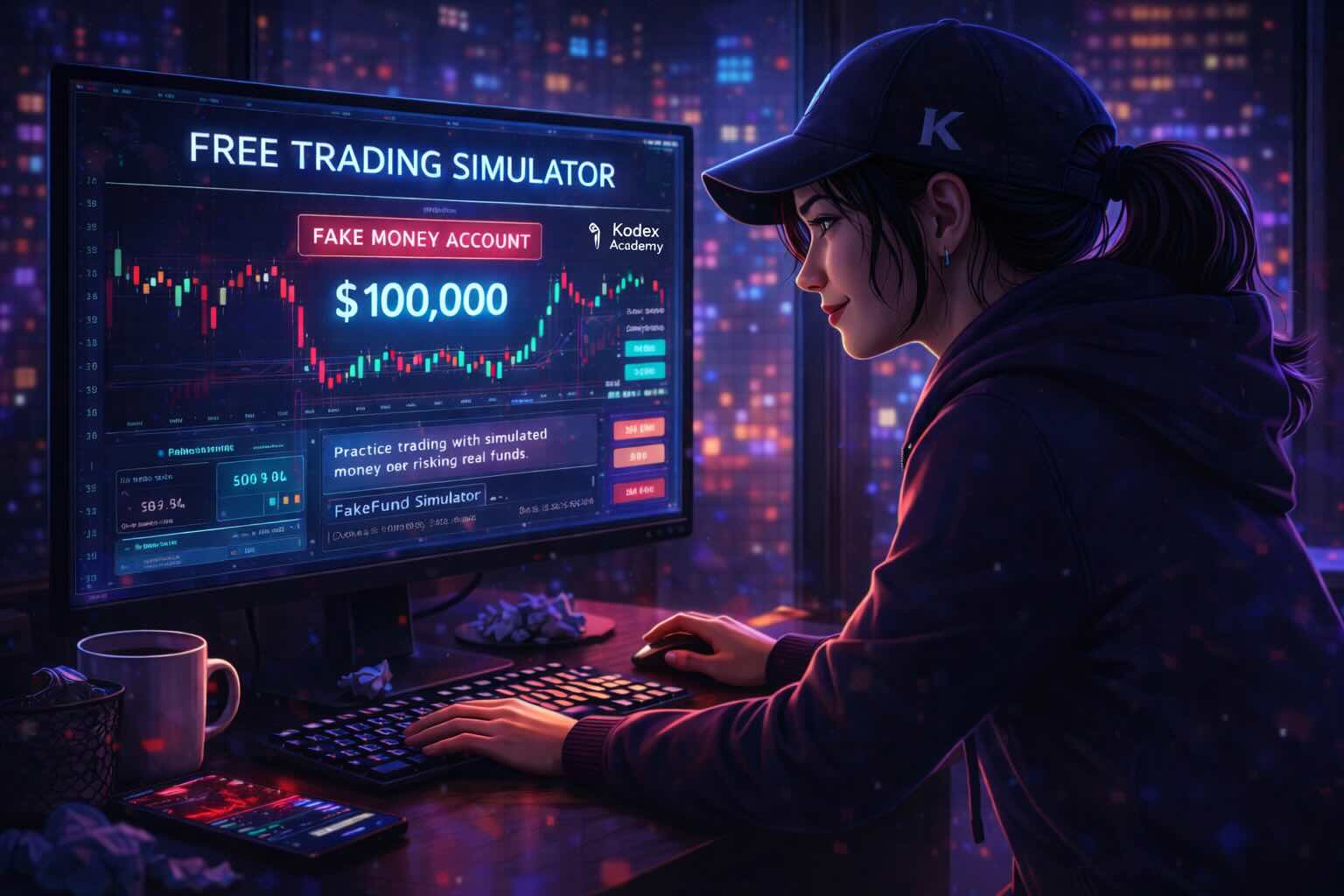
Take a loss on a paper account, then watch how fast the urge to open the next position arrives, before any thesis has formed. Run the 20-minute cooldown from this piece and try to write the following trade as one clean sentence (setup, entry, exit) that never references the one that just closed. If it cannot be written, skip it, and let Pattern Intelligence surface the signature afterward: frequency climbing after losses, size drifting, the gap between entries shrinking. Nothing in the account is real except the reflex, which is the exact thing you came to interrupt.