




















































































Verified Platforms
Quick Links
Where to Stay Secure
Thank you! Your submission has been received!
Oops! Something went wrong while submitting the form.
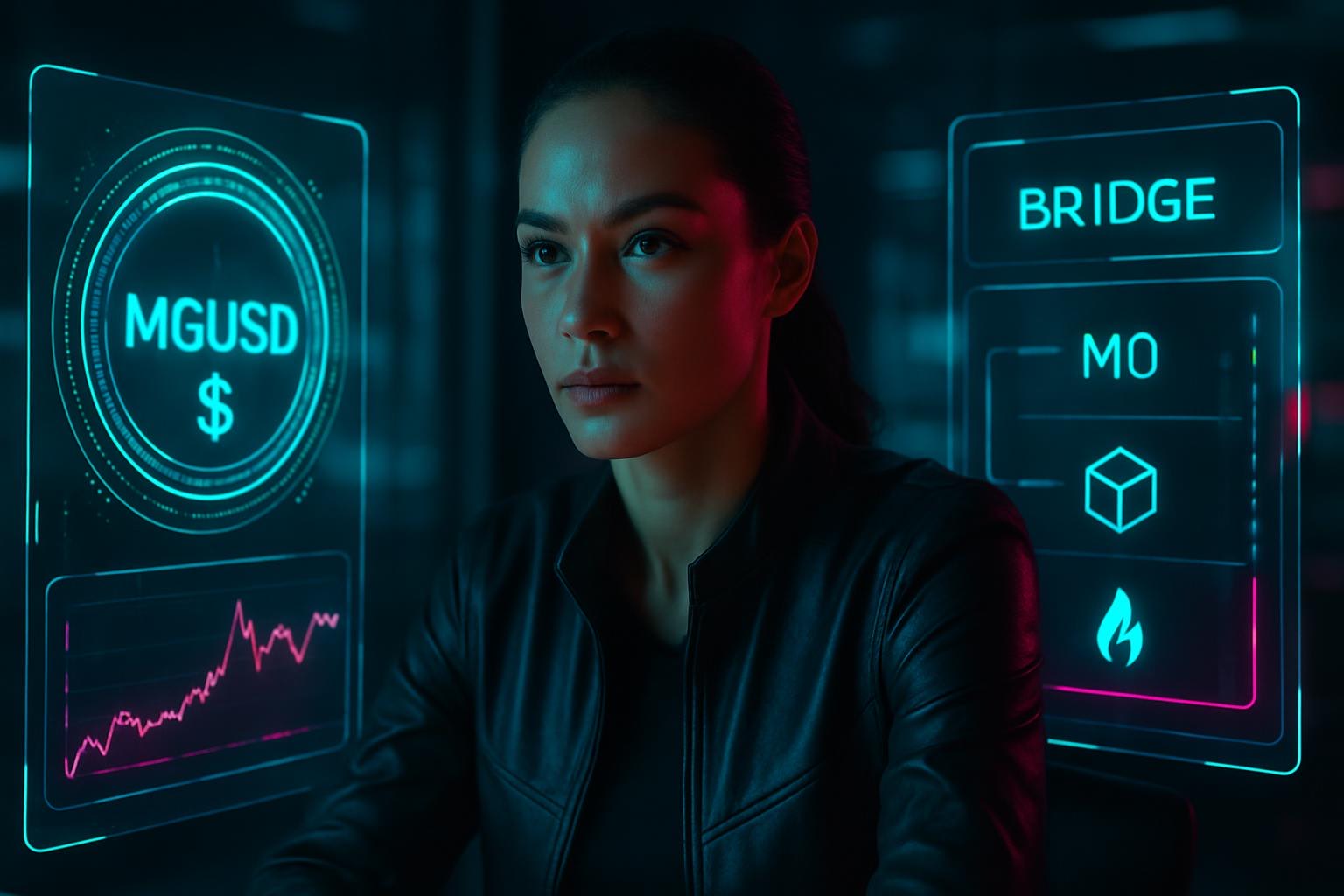
The MoneyGram logo sits on every MGUSD token. MoneyGram is not the company that owes you the dollar behind it.
That reads like a technicality. It is the whole story. When MGUSD went live in the United States on June 2, 2026, it looked like a familiar brand stepping into crypto. What actually shipped was a dollar MoneyGram designed, named, and distributes but does not issue, back, or hold. Three other companies do those jobs. The name on the token is the one part of the stack that owes you nothing. What backs MGUSD sits somewhere else entirely.
You will read this one with Lilith. Twenty years in cybersecurity before crypto left her with a single reflex: before she trusts anything, she asks who is actually holding it and what breaks if they let go. A white-label dollar is built to make that question hard to ask.
So you are holding MGUSD, or about to send money through it. Lilith does not open the price chart. The token reads $1.00 and that number was never the question. She pulls MGUSD apart into the companies standing behind it, because that is where your dollar actually lives.
Start at the buy screen, because that is where the misread begins. You open the MoneyGram app, you fund a balance, the balance shows MGUSD, and the brand you already trusted for cross-border transfers is sitting right on it. The reasonable conclusion is that MoneyGram is holding your dollar.
It is not.
MGUSD is a white-label stablecoin. MoneyGram is the brand and the distribution network. The issuer of record, the entity that takes your dollar, holds the backing, and owes you the redemption, is Bridge, a Stripe company and a regulated stablecoin issuer. CoinDesk framed the launch as MoneyGram joining the digital-dollar rush. The part underneath the headline is that Bridge, not MoneyGram, is the regulated issuer. So what backs MGUSD is not the MoneyGram balance sheet you were picturing, but Bridge's reserves and Bridge's promise to redeem.
The logo is distribution. The liability sits one company over.
This is the same question that decides how a stablecoin holds its peg: a dollar token is only ever as good as the entity that has to hand you a real dollar back for it. Here, that entity is not the one whose name you see.
Lilith does not stop at naming Bridge. One issuer is still a single name to trust, and a modern stablecoin is never run by one company. She splits MGUSD into the three jobs that have to happen for the token on your screen to mean a dollar, and she asks the only question that matters for each: what happens to your balance if this one fails.
Bridge is the issuer. It takes the dollars, holds the reserves, carries the money-transmission licensing, authorizes every mint and burn, and runs the compliance and sanctions screening. If Bridge's reserves come up short or its redemption desk freezes, your dollar is the thing at risk. This is the company your claim actually points at.
M0 is the mint-and-burn layer. It is the smart-contract infrastructure that creates and destroys MGUSD and deploys it on the Stellar blockchain. Per MoneyGram's own announcement, M0's contracts mint and redeem the token while Fireblocks provides the wallet infrastructure. If M0's contracts carry a bug, the failure is technical: tokens misbehaving on-chain, not necessarily a hole in the backing.
Fireblocks is custody. It holds the keys to the operational wallets that move MGUSD through the network, using MPC, the key-splitting setup where no single person ever holds the whole key. If Fireblocks is compromised or locks up, the reserves can be perfectly whole while the float you are trying to move is frozen in place.
Three companies. Three different ways your dollar stops behaving like a dollar, and not one of them is named MoneyGram.
Here is the part that turns MGUSD from a MoneyGram story into a pattern you will meet again. Bridge does not issue only MGUSD. It runs a platform it calls Open Issuance, and the same engine mints a whole shelf of differently-branded dollars.
Per Bridge's own documentation, that one stack issues USDB under Bridge's own brand, MGUSD for MoneyGram, USDH for Hyperliquid, CASH for Phantom, and dollars for MetaMask and others, all on shared infrastructure with shared liquidity. This is what stablecoin-as-a-service means in practice. A company brings a brand and a distribution network and rents the issuance, the reserves, and the custody from one provider.
Sit with what that does to the logo. The name on the token does not tell you the reserve quality, the custodian, or your redemption right, but only who is distributing it, because all three can be identical across a dozen tokens that look like competitors.
Two dollars with different logos can be the same dollar underneath.
So the brand is the marketing. The issuer is the answer.
Lilith lays MGUSD out in layers, because the layers are the thing you are actually evaluating:
| Layer | What the logo implies | Who actually holds it |
|---|---|---|
| Brand | MoneyGram stands behind the dollar | MoneyGram: the app and distribution, no balance-sheet liability for the dollar |
| Issuer of record | MoneyGram issues it | Bridge (a Stripe company): takes the dollars, owes the redemption |
| Mint and burn | MoneyGram controls supply | M0: smart contracts that create and destroy the token |
| Reserves | MoneyGram's cash | Cash and short-duration money-market funds at BlackRock, Fidelity, Superstate (per Bridge) |
| Custody of the float | MoneyGram's vault | Fireblocks: MPC custody of the operational wallets |
| Your redemption right | A claim on MoneyGram | A claim on Bridge's reserves, reached through MoneyGram's app |
Every job that makes MGUSD worth a dollar belongs to a company that is not MoneyGram. That is the white-label structure in one view: the brand owns the relationship with you, and another set of companies owns everything that makes the dollar good for a dollar.
This is the opposite of a bank that issues and backs its own dollar, where one balance sheet is both the name and the backing. MGUSD splits those apart by design.
A claim on Bridge's reserves is only as good as the reserves. So you go read them, the way you would read the redemption page before you trust the buy button.
Per Bridge's disclosures, MGUSD is backed 1:1 by cash and short-duration money-market funds held with BlackRock, Fidelity, and Superstate. That is a real answer, and it is also a sentence to handle with care. It comes from the issuer describing itself, not from an independent audit. Lilith's habit here is old and boring and correct: find the attestation, read what it actually certifies, and do not quietly upgrade the issuer's own description into proven fact in your head.
There is a word trap waiting in this. An attestation is a snapshot a third party confirms at a single point in time. An audit is a deeper, standards-bound examination. Issuers tend to publish the first and let you assume the second.
Attestation is not audit.
This is also where being a regulated, GENIUS-ready issuer means something specific, and something smaller than it sounds. Under the GENIUS Act, a payment stablecoin issuer has to hold 100% reserves in cash, insured deposits, and short-term Treasuries, and publish the monthly composition of those reserves. The federal rules putting that into force are being finalized through 2026, with the regime fully biting in 2027. So "GENIUS-ready" describes Bridge building toward a standard that is still being written. It does not mean a regulator audited the MGUSD reserve this morning.
And read the other half of the word "regulated." The same rulebook that mandates reserves also assumes the issuer can freeze and seize tokens to meet sanctions and law-enforcement orders. A regulated dollar is a compliant dollar.
Compliant means freezable.
Put the pieces together and the comforting version comes apart. Regulated issuer, name-brand distributor, reserves at firms you have heard of. Each phrase is reassuring. None of them makes your dollar risk-free, and reading them as a guarantee is how people get caught off guard.
Your redemption path runs through Bridge, not MoneyGram. When you need a real dollar back, MoneyGram's app is the door, but Bridge's reserves and Bridge's redemption process are the room behind it. A distributor can keep its app humming while the issuer behind the dollar is the part under strain.
Custody concentrates at Fireblocks. That is one well-defended point, which is exactly why it is also a single point. Strong security is not the absence of a chokepoint. It is one guarded chokepoint instead of many weak ones, and a chokepoint can still jam.
Access is conditional. A remittance dollar earns its keep only if it moves through a corridor at the moment you need it. A compliance hold, a sanctions screen, a locked wallet, any one of these can gate your access while the reserves sit fully intact. The dollar can be entirely backed and still out of reach the minute you reach for it.
This is issuer risk and custodian risk and access risk, stacked on top of the peg.
The peg can hold while one of the other layers is the thing that bites.
So is MGUSD safe to hold? The honest answer is that "safe" is the wrong shape of question, because the answer depends on Bridge's reserves and your redemption right, not on MoneyGram's brand. A white-label dollar can be perfectly sound or quietly fragile, and the logo looks identical either way. What you can do is read the chain before you hold, instead of after something breaks.
Lilith's checklist is four questions, and it travels to any white-label stablecoin you meet, not only this one:
Run those four and the brand stops doing your thinking for you. This is the Survival Framework pointed at the thing you settle in. You are not asking whether a name is trustworthy. You are asking what, exactly, you are a creditor of.
The next white-label dollar you meet will wear a different logo and the same skeleton: a brand you know, an issuer you have to look up, reserves somewhere you have to go read, a custodian holding the keys. Learn to read this one and you have read all of them.
The logo is the easiest thing on the token to see.
It is the least informative thing about whether your dollar is good for a dollar.
No. MoneyGram brands and distributes MGUSD, but the issuer of record is Bridge, a Stripe company, which holds the reserves and owes the 1:1 redemption. What backs MGUSD is Bridge's reserves, not MoneyGram's balance sheet, so the company you verify is Bridge.
No. MGUSD is a stablecoin, not a bank deposit, so it carries no FDIC insurance. Its backing, per Bridge's disclosures, is cash and short-duration money-market funds, which is a reserve claim on the issuer, not an insured deposit at a bank.
It is the model where one provider issues, backs, and custodies a dollar token while a brand puts its name on it and distributes it. Bridge's Open Issuance platform mints MGUSD, USDB, USDH, CASH, and others on shared infrastructure, so the brand is the label and the provider is the dollar.
USDC is issued and backed by Circle under its own name, so the brand and the issuer are the same company. MGUSD is a white-label dollar: MoneyGram is the brand and Bridge is the issuer. With MGUSD the name and the backing are different companies, so you verify Bridge, not the logo.
Yes. A regulated, GENIUS-ready issuer is built to comply with sanctions and law-enforcement orders, which includes freezing or seizing tokens at specific addresses. Issuance control at Bridge and key custody at Fireblocks are the points where a freeze would actually happen.
Hold a stablecoin balance in the simulator and do what Lilith does: leave the price chart closed, because $1.00 was never the question. With no real dollar riding on that balance, practice pulling the token apart into its issuer, its reserves, its custodian, and your redemption door, so reading the stack behind a logo becomes reflex instead of afterthought.