
















































































Verified Platforms
Quick Links
Where to Stay Secure
Thank you! Your submission has been received!
Oops! Something went wrong while submitting the form.


Think of the trade you are proudest of. Now think of the one that still stings. They almost certainly had very different hold times, and that gap is not random. It is the most honest thing your history has ever told you about how you actually trade.
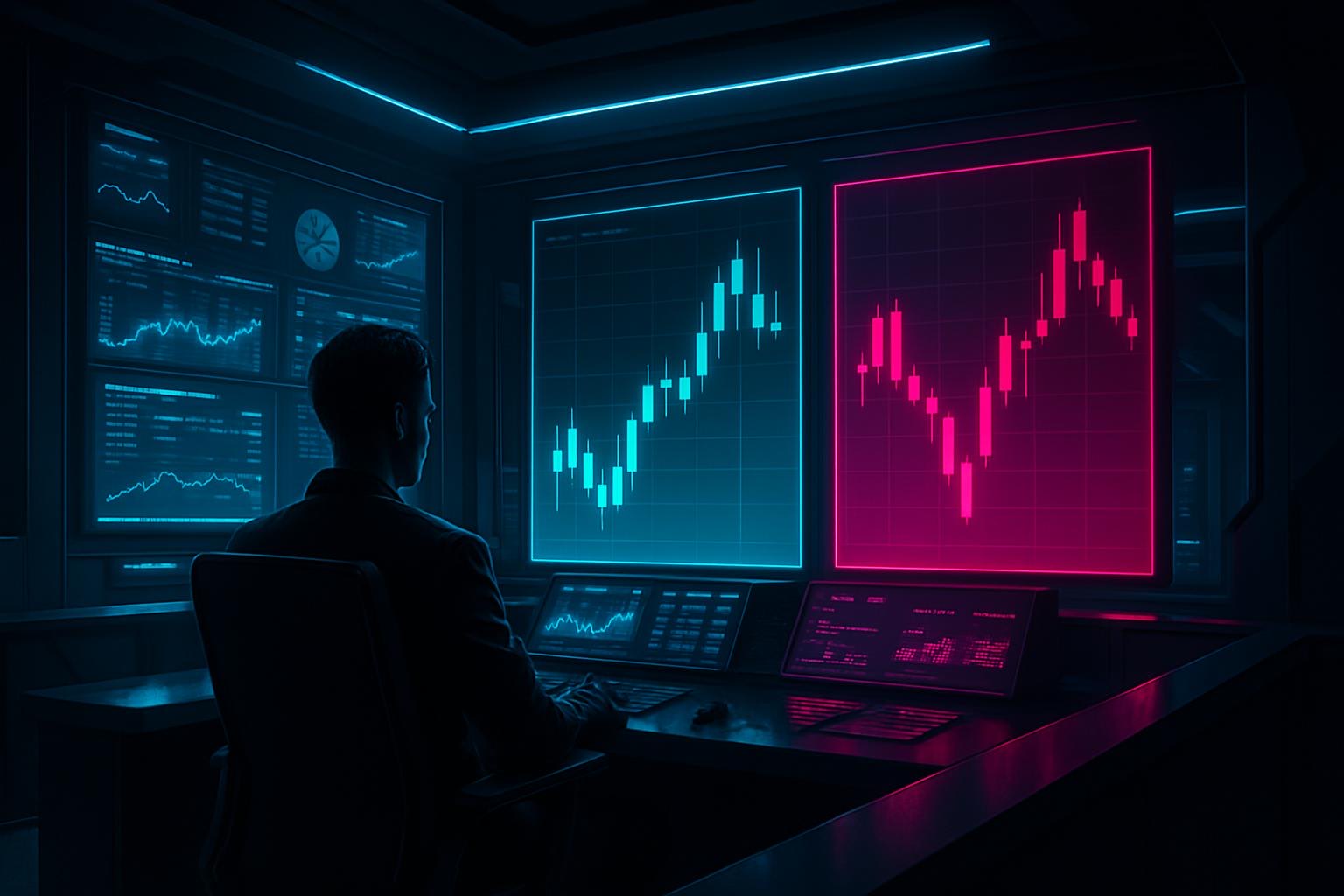
You closed the good one fast. It was green, the gain was real, and a voice said take it before it turns. The bad one you held. It was red, the loss was still on paper, and a voice said give it room, it comes back. Two decisions that felt like opposites while you were inside them. Underneath, one reflex.
This is a walkthrough with Eunha, the Kodex lens for the inner game, the part of trading that plays out in the seconds between you and the exit. She does not read charts in this one. She reads the clock: how long you hold what wins, how long you hold what loses, and the distance between those two numbers.
"You do not have a timing problem," she says. "You have a hold-duration problem, and it leaves a fingerprint."
The story you tell yourself is that these are two separate flaws. You take profit too soon on the good trades. You are too stubborn on the bad ones. Work on them one at a time.
They are not two flaws. They are the same asymmetry seen from both sides. A gain that exists feels fragile, so you rush to make it certain. A loss that exists feels unreal until you sell, so you delay the moment that makes it true. Locking in the winner and refusing to close the loser come from one instinct: certainty feels safe on the way up and unbearable on the way down.
Economists named this in 1985. The disposition effect is the documented tendency to sell what has risen and keep what has fallen. The engine under it is loss aversion: a loss lands about twice as hard as the same-sized gain feels good. When Terrance Odean went through ten thousand brokerage accounts, the pattern was blunt: people sold their winners far more readily than their losers, and the winners they let go kept outrunning the losers they kept. So you run the two outcomes on different clocks. The winner you close to protect a feeling. The loser you hold to postpone one.
That is why the fix is not two rules. It is one number.
Picture the last winner you clipped. You are up a few percent by mid-morning, the position is finally green after a nervous open, and the number on the screen feels like something that could be taken back at any second. You sell. Relief, clean and immediate. By evening the same asset is up three times what you banked, and you are telling yourself you were being disciplined.
Now picture the loser you would rather not picture. It went red in the first hour and you decided to be patient. Patient through the afternoon. Patient across a weekend that, in crypto, never actually closes, so the position kept sliding against you the whole time while you refused to open the app. Patient until the small planned loss had quietly become a large unplanned one. At no point did you choose to lose that much. You only ever chose to wait a little longer, again and again, and the waiting did the rest.
Two Tuesdays, two feelings that could not seem more different. One is relief and one is dread. Eunha's point is that relief and dread are the same mechanism reporting from opposite ends of a trade. "The winner and the loser are not two stories," she says. "They are one habit, told twice."
Entering is the easy half, and it lies to you about how hard the rest will be.
When you enter, nothing is at stake yet. You choose the moment. You can wait for the setup, pass on it, come back tomorrow with no cost for having waited. The decision is calm because it is optional, and optional decisions are where discipline is cheap.
Exiting is none of those things. By the time you are deciding whether to sell, the position already exists, the number is already moving, and doing nothing is itself a decision with a price attached. In crypto there is no closing bell to force the choice for you, no end-of-session that flattens the position whether you meant to or not, so every extra hour you hold is a live decision you are making even when it feels like waiting. Eunha's word for it is loaded. "Every exit happens under pressure the entry never had. The entry is you acting on the market. The exit is the market acting on you."
That is where the hold time bends. On a winner the pressure says finish it, bank the certain thing before it evaporates. On a loser the same pressure says wait, do not make it real yet. The clock snaps short or stretches long depending on the color of the position, not the quality of the trade. You are not choosing a hold time. The feeling is choosing it for you, one trade at a time, and it chooses the same way every time.
Here is the part your history knows and you do not.
Your winning trades tend to cluster around one hold length. Your losing trades cluster around a different one, usually longer. That is not luck and it is not a coincidence. It is the disposition effect printed onto a timeline. The trades you closed quickly skew green because you closed them quickly to keep them green, and the ones you sat on skew red because you sat on them hoping.
The distance between those two averages is the single most useful number in your record. Kodex Pattern Intelligence reads it as your Hold Duration Sweet Spot: the window where your exits actually pay, set against the window where they bleed. A sweet spot has two edges, not one. Sell before it and you hand back the move you were right about; hold past it and you give the gain back to the market that lent it to you. "Let your winners run" is true right up until the point it stops being true, and that point is a hold time, not a slogan. It is not a tip lifted from someone else's strategy. It is a measurement taken from your own behavior across every trade you have closed, the same way Pattern Intelligence surfaces the rest of your signature from what you did rather than what you meant to do.
It matters because a hold time is invisible in isolation. One sell feels like a judgment call. Another feels like patience. Only when the same behavior is laid across hundreds of exits does the shape appear, and the shape says something no single trade can. Watching simulated crypto trades accumulate is one way to see that shape form without a real balance on the line, which is the only safe way to study a habit before it studies you.
You feel the individual sells. You never feel the pattern across them. That is the whole trap.
Every exit arrives wrapped in its own reason, and each reason is defensible on its own. The winner you cut had "gone far enough." The loser you held "just needed time." Read one at a time, none of them is a crime. Read together, they are the same decision made five hundred times, and the cost does not live in any single one. It lives in the gap between how long you give a trade that is working and how long you give one that is not.
The behavior hides from you precisely because you meet it retail: one trade per encounter, one story at a time. You cannot fix a hold-time habit you cannot see, and you cannot see it from inside a position, where the only things visible are the current candle and the current feeling. The pattern lives one level up, in the record, where the clock does not lie and the story you told yourself is not invited.
Laid side by side, the two exits stop looking like different decisions.
| The winner you sell | The loser you hold | |
|---|---|---|
| What you feel | Take it before it turns | Give it room, it comes back |
| What you call it later | Discipline | Patience |
| What the clock does | Snaps short | Stretches long |
| What actually decides it | The gain feels fragile | The loss feels unreal |
| What it costs you | The move you left behind | The loss that grew |
| What the record shows | Winners held too briefly | Losers held too long |
Same reflex, opposite direction, one line in your history. The feeling swears the two are unrelated. The clock proves they are the same. Eunha puts it flatly: "You are not the sum of your intentions. You are the sum of your exits."
Once you can see the number, you can trade against it, and the moves are unglamorous by design.
Define the exit before the entry, and set at least one of those exits in time, not only in price. While the decision is still calm and optional, write down where you get out if it works, where you get out if it does not, and how long you give it to prove itself. A trade that has gone nowhere by the time your winners usually resolve is telling you something, and "nowhere" has a quiet habit of turning into "down." An exit chosen before the position exists is an exit chosen by you. An exit chosen after is an exit chosen by the pressure. This is the quiet core of any real risk process: the accounts that last break on process, not on prediction.
Then compare your two averages and treat the gap as the target. If your winners live half as long as your losers, the work is not hunting for better entries. It is holding the working trades longer and cutting the broken ones sooner, until the two hold times move toward each other instead of splitting apart. Let a planned runner run past the point where taking the gain feels good, because that itch to bank it is the exact reflex the number is measuring. And keep a log of the trades you cut early, with where they went afterward, so the winner you clipped at plus two percent that ran to plus twelve stops being a story you forget and becomes evidence you keep.
None of this asks you to predict the market. It asks you to read yourself accurately, which is harder, and which is the same lesson the revenge trading loop teaches from the other direction: the behavior you cannot observe is the one running you.
You have been trying to fix your exits by trying harder at each one. That is why it has not worked. Willpower applied one trade at a time loses to a reflex that shows up on every trade.
The hold-duration gap is not a discipline problem to be out-muscled in the moment. It is a fact about you, already recorded, waiting to be read. Once you know the real distance between the trade you are proud of and the trade that stings, you stop managing feelings and start managing a number. And a number, unlike a feeling, holds still long enough to be changed.
You have read the theory. The number is sitting in your own record, waiting. The Trading DNA read surfaces your hold pattern and your archetype in about two minutes with no signup, and from there the same behavior is yours to watch on a $5,000 paper account: sell the next winner the instant it feels fragile, then count the candles you left on the table.