









































You're not losing to the market. You're losing to yourself.
© 2026 Kodex Academy · Education, not financial advice. The Kodex crew are fictional personas.

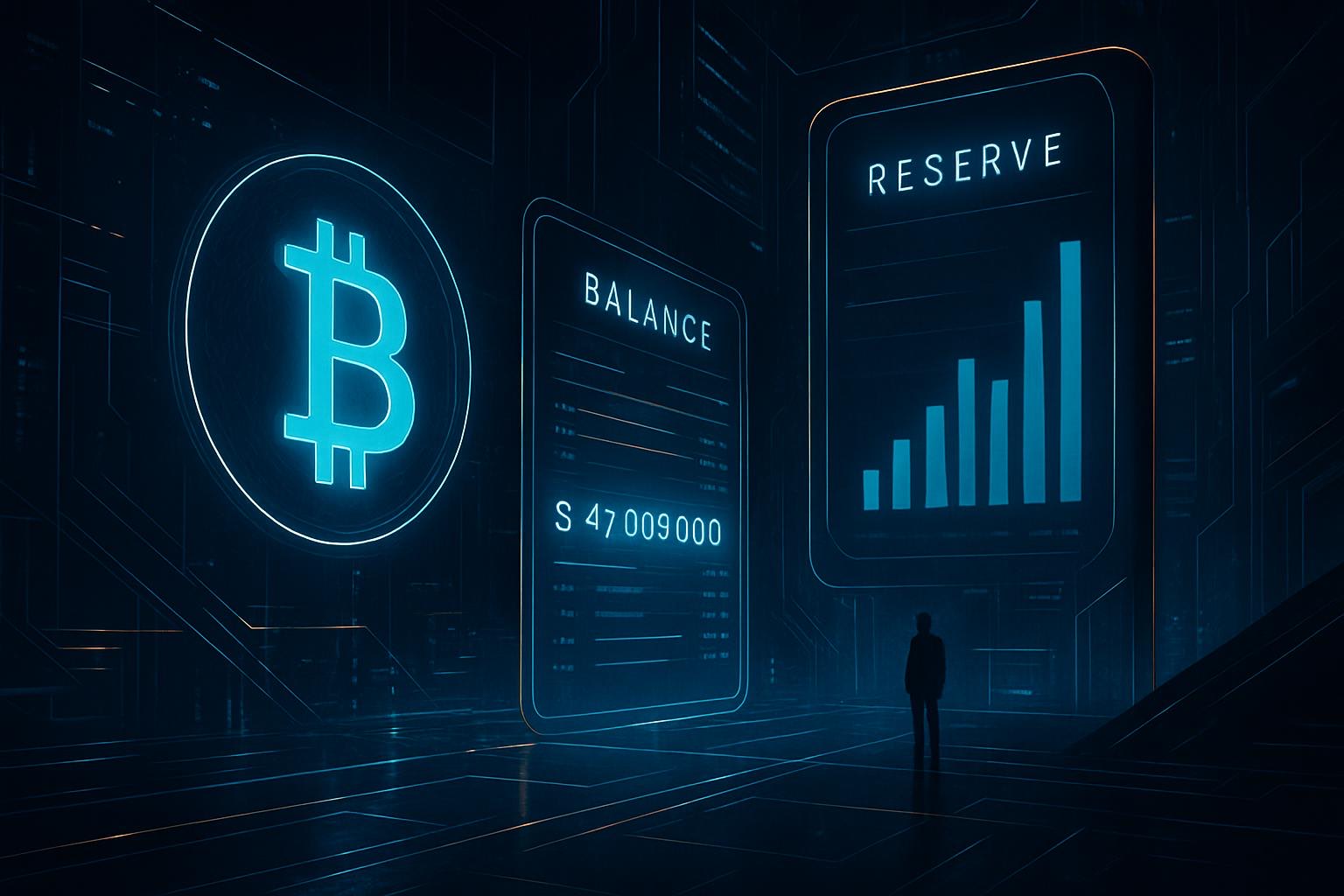
Someone plugged a $150 device into the wall, left it running for about eight hours, and pulled roughly $200,000 in bitcoin out of a single block. The number is real. The lesson it looks like it teaches is not.
That win landed in July 2026: block 957,382, a 3.1382 BTC reward found by a Bitaxe the size of a paperback. CoinDesk reported it with the odds attached, something close to one chance in 18,000 years of runtime. It was not the only one. Solo miners are finding more of these blocks than they did a year ago, even as each block gets harder to find.
The wins went up. The odds went down.
Both are true, and that gap is the whole story of solo bitcoin mining right now.
Walk through this one with Tao. He is the bridge in the Kodex world, closer to student than master, the one who feels the pull of a story like this before he reasons his way past it. The question he is holding is the one every headline like this plants: is solo bitcoin mining worth it, now that a paperback-sized miner can apparently print a house deposit?
Tao reads it twice. The first time, he wants a Bitaxe. The second time, he starts doing arithmetic.
Tao lines the recent wins up next to each other, because a pattern is easier to argue with than a single story.
Five months before the July block, in February 2026, a solo miner rented about a petahash of hashrate for a short window, roughly $75 of on-demand compute, and hit block 938,092 for another payout near $200,000. A return close to 2,600 times what it cost.
Different route, same size prize.
| The win | Entry method | Cost | What it should have taken | Reward |
|---|---|---|---|---|
| July 2026, block 957,382 | A self-owned Bitaxe, about 1 TH/s, run for ~8 hours | ~$150 in hardware | on the order of 1 in 18,000 years of runtime | 3.1382 BTC, about $200,000 |
| February 2026, block 938,092 | ~1 PH/s of hashrate rented for a short window | ~$75 | astronomically long, over a few minutes | 3.125 BTC, about $200,000 (~2,600x) |
Strip the details and the two wins are the same shape. A few dollars, odds that round to zero, a jackpot on the other side.
That is a lottery ticket.
It does not matter whether you bought it by owning a cheap device or by renting a supercomputer for an hour.
The network behind those odds got harder, not easier. Bitcoin's mining difficulty sat around 127 trillion this month. It slipped about 5% on July 12, and a dip like that nudges every miner's chance a touch better for a while. It does not come close to changing the picture. A Bitaxe is still one voice in a stadium the size of a small country's power grid.
So both facts hold at once. In the trailing year, solo miners found roughly two dozen blocks. CoinDesk counts 24, about 75.44 BTC, up around 41% from the year before. Other tallies land a little lower. The direction is the point: more solo blocks are landing, against longer odds than ever.
Tao says the thing out loud, because it sounds wrong until you hear it. "More people are winning. Each of them was less likely to win than the last."
The contradiction dissolves the moment Tao splits one question into two. What are the odds on a single ticket? And how many tickets are being bought?
The per-ticket odds are set by the network. One small miner against 127 trillion units of difficulty is a fixed, brutal number, and cheap hardware does nothing to improve it. What cheap hardware changes is the second question.
A Bitaxe costs $60 to $150 and draws less power than a light bulb. On-demand services let anyone rent a wall of hashrate for a few minutes and point it at a solo pool like CKPool or Braiins Solo. Neither one shortens the odds. Both shorten the line to buy in.
Buy enough tickets across enough people and someone wins, however long the odds, purely because the crowd of players grew. What lowered was not the odds.
It was the price of admission.
There is a second reason the edge never shows up, and it is built into Bitcoin itself. Difficulty is not a fixed wall. Every two weeks the network re-tunes it to hold blocks near ten minutes apart, so when cheap miners flood in and total hashrate climbs, difficulty climbs with them and drags each ticket back down. Tao watches the loop close on itself. Any advantage a cheaper rig might have opened gets absorbed by the rest of the field rushing to the same trade. The house does not need to cheat. The math re-levels the table on its own.
So the rise in solo wins is not a signal that mining became worth it. It is a headcount. More tickets sold, more winners printed, and every winner still drawn from a pool where the expected result is nothing.
Now Tao asks the question that turns a headline into data.
Where are the losers?
They are not on his feed. The person who ran a Bitaxe for six months and found nothing does not make a video about it. The desk that rented a petahash, missed, and paid the bill does not post the receipt. Every winner is loud and every loss is silent, so the feed fills with jackpots and empties of the far larger crowd that got zero.
That is survivorship bias, drawn in public. You are seeing the surviving tail of a losing bet and reading it as the whole distribution.
The rental services widen the crowd even further. When a wall of hashrate can be hired by the minute, the people taking a swing at a block are no longer only the hobbyists who bought a box. They are anyone with a card on file and a spare afternoon. More players, more visible winners, and still nobody filming the far larger number who rented, missed, and moved on without a word.
The point sits inside a fact the honest mining write-ups keep repeating. A daily shot at a block is not a countdown you advance through by waiting. FutureBit walks through the odds and the shape holds: each day resets the same tiny probability, independent of every day before it. Run the device for a decade and you have not gotten closer. You have taken the same long shot 3,650 times.
Tao has seen this exact shape somewhere less exotic than a mining rig. He has seen it in a trade log. Kodex built a 305-trade behavioral dataset partly to keep the silent outcomes visible, the ones that never become a story because they lost and got quietly closed.
Worth it is a price question, and Tao finally has the two numbers to answer it. They are not the same number, and confusing them is where the trouble starts.
The first is expected value: what the average ticket returns if you played it thousands of times. For solo mining on cheap hardware against the whole network, that number sits at break-even at best once you count electricity and the rig itself. The electricity-versus-reward math has been worked through in detail for European power rates, and it lands in the same place. The reward is enormous and the probability is microscopic, and they roughly cancel. Put a number on it and the spell breaks. Run that $150 Bitaxe flat out for years and the bitcoin you should expect to mine, on average, is a rounding error next to the power it drew. The jackpot is real. It is just not yours to expect. Nobody is handing out free money. If they were, difficulty would climb until they stopped.
The second number is variance: how wildly the outcomes swing around that average. Variance is the whole point of the ticket. You are not buying the average. You are buying a tiny chance at a life-changing number and a very large chance at nothing, and the distance between those two is the product.
Read that way, the answer stops being a flat yes or no. A Bitaxe on your desk is worth it if you want a cheap, honest lottery ticket and a full node with it, and you have priced the likeliest outcome at zero going in. It is not worth it if the recent wins convinced you the odds are on your side.
They are not.
The wins are what a fat tail looks like when the crowd buying tickets grows.
Ava, who reads structure for a living, would put the geometry in one line. You do not judge a bet by its best outcome. You judge it by the shape of every outcome it can produce.
Tao was never going to buy a Bitaxe. He cares about this story for what it does one screen over, inside his own trading.
You see someone post a 100x. You see the screenshot of the trade that turned $500 into $50,000. You do not see the hundred people who took the identical setup and got liquidated, because they closed the tab and said nothing. The winner trends. The distribution stays hidden. You copy the ticket and price only the jackpot.
It is the same math as the mine. A tiny probability, a huge payout, a crowd large enough to guarantee a visible winner, and a story that survives precisely because it won. Chasing it is not a willpower failure. It is a measurement failure. You are working from a sample that deleted every loss before you ever saw it.
This is why Kodex logs the boring outcomes. The Market Simulator has recorded 1,245 completed practice trades on $5,000 of paper capital, and the value is not the wins in there. It is that the losses stayed in the log, where you can count them. Pattern Intelligence reads that history back for behavioral signatures, tilt cascades and strategy drift among them, so the trade you are about to copy gets checked against your full record instead of the one screenshot that reached you.
That is what trading discipline actually is. Not resisting the exciting trade through gritted teeth. Seeing the ninety-nine invisible versions of it before you take the one in front of you.
Tao does not end where the headline does, with a verdict on whether to mine. He ends with a habit that outlives the story.
Before you buy any ticket, a block or a trade, price the whole distribution and not just the prize. Ask what the average outcome is. Ask how wide the swing around it runs. Ask how many losing outcomes you will never see because nobody posts them.
Then decide.
A lottery ticket you have priced honestly is a fine thing to buy. A lottery ticket you mistook for an edge is how accounts quietly empty.
The mining win was real. The $200,000 was real. What was never real is the idea that a visible winner tells you anything about your own odds. The Survival Framework starts from the same place: read the full range of what can happen before you size the bet, not after it surprises you.
The next time a cheap device prints a fortune, you will feel the pull. Let it teach you the distribution instead of the dream.
You cannot plug a Bitaxe into the simulator, but you can run the trade that makes the identical bet: a huge payout, a hit rate near zero, the setup you would copy off someone's jackpot screenshot. Take it twenty times on a $5,000 paper account, where a loss costs you nothing but still stays in the log instead of getting quietly closed, and watch the losers stack up while the jackpot mostly refuses to show: that is the full distribution the headline deleted before it reached you. Open Pattern Intelligence after and let it tell you whether that setup was an edge or a lottery ticket you priced as a sure thing.