




































































Verified Platforms
Quick Links
Where to Stay Secure
Thank you! Your submission has been received!
Oops! Something went wrong while submitting the form.

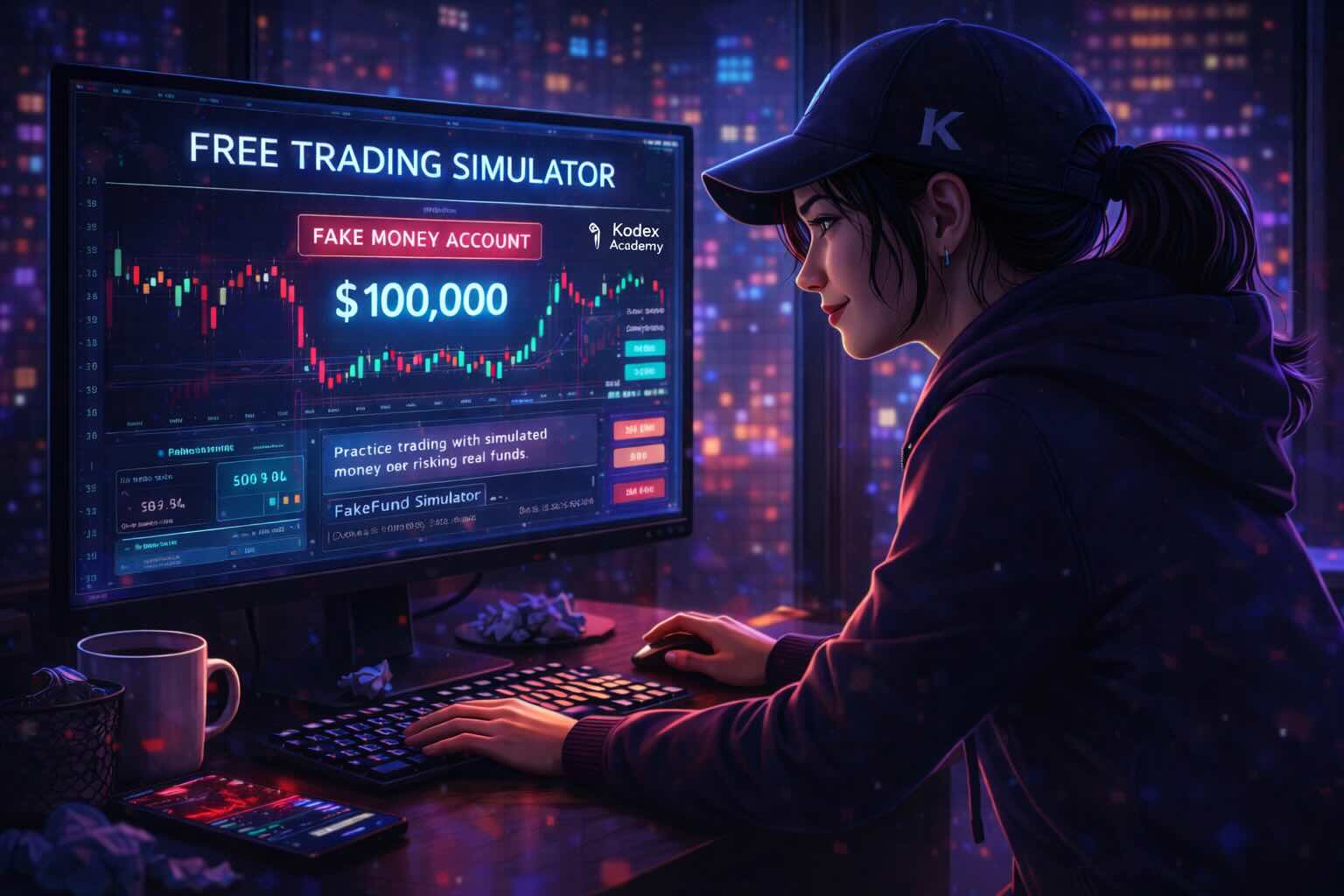
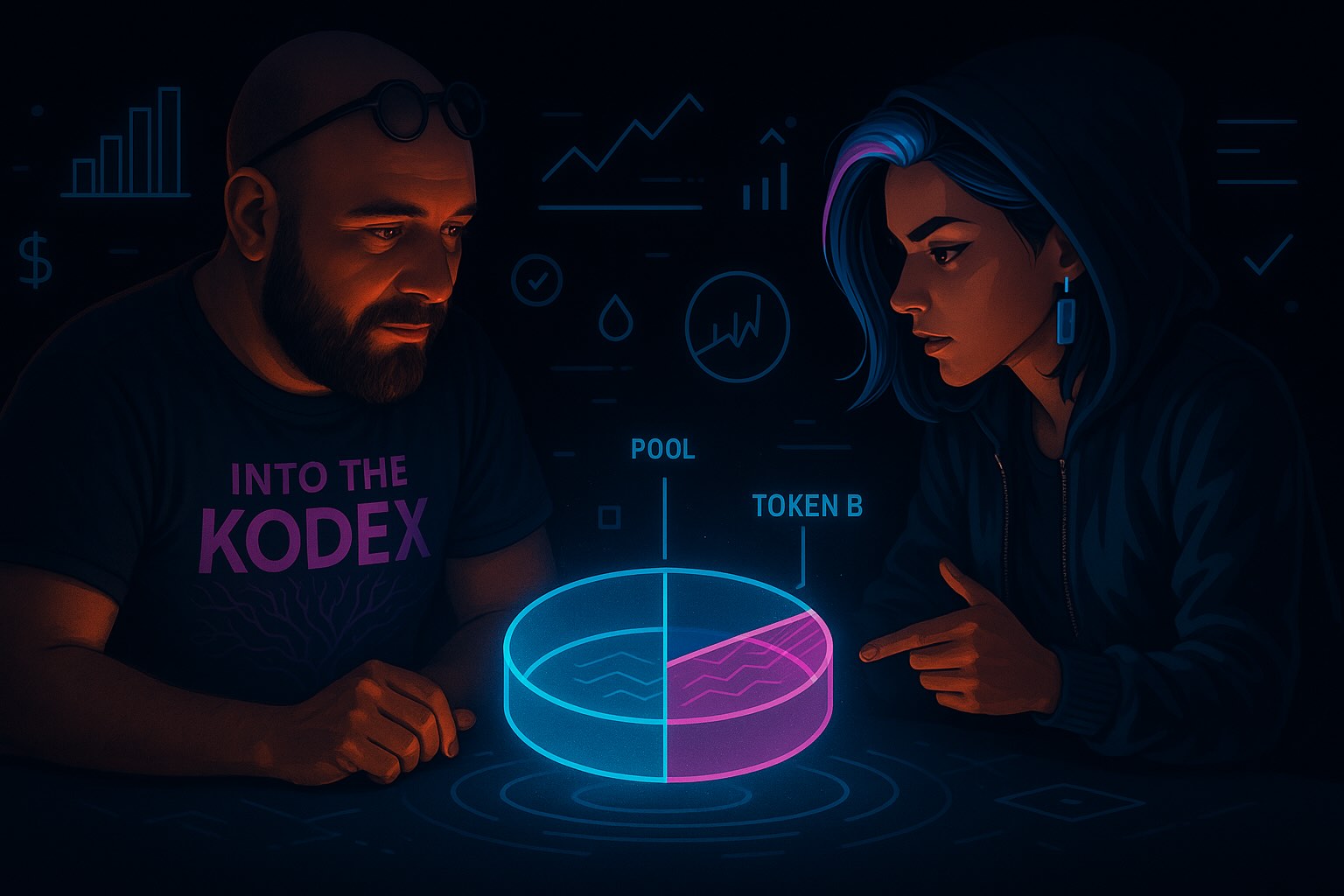
This is the Kodex Market Simulator.
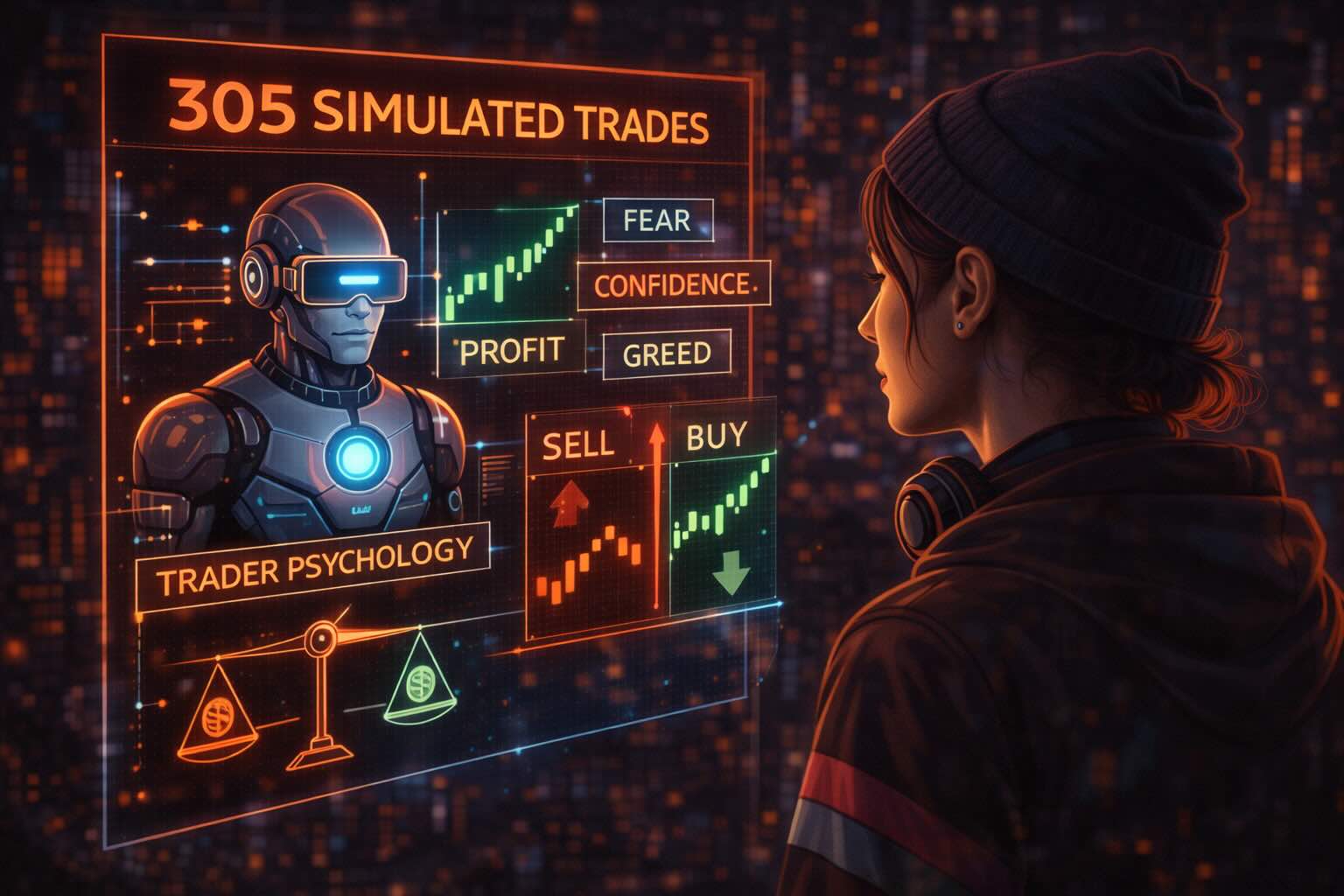
This piece is about what a trading simulator is actually for — and why "practice" is too small a word for it.
By the end, the function should be clearer: fake capital is not there to imitate success. It is there to expose behavior. The value is not in proving that a chart can be read correctly once. The value is in discovering what happens between the chart and the click — before a single cent of real capital is at risk.
Ava guides the session from the start.
She does not build the session around perfect trades. She builds it around the trades that expose what goes wrong.
The session where the paper account gets destroyed often teaches more than the one where everything appears to work.
Ava opens an empty chart.
No open positions. No green. No red. Just price moving with complete indifference.
"Before any position goes on," she says, "what do you think a simulator is for?"
The obvious answer comes first: practice, familiarity, learning the interface, getting used to execution.
She nods once.
"That's the surface," she says. "The real function is deeper."
She taps the screen.
"A simulator is where bad instincts become visible in an environment that cannot hurt you financially. Clean trades are easy to respect after the fact. The useful question is what happens when price moves against the position before discipline has become a habit."
She sets the account to $5,000 paper capital.
"The goal isn't to grow this," she says. "The goal is to find out what happens when it starts disappearing."
That is the right frame.
A simulator is not there to flatter confidence. It is there to expose instability while the cost is still artificial and the feedback is still survivable.
The first position opens.
ETH. Two percent of the paper account. Clean entry. Break of structure. The setup is read correctly enough.
Price moves in the right direction. Slowly at first. Then with more intent.
The trade gets closed early.
Not because the structure changed. Not because the exit condition was reached. Because the unrealized gain felt like enough.
Ava says nothing while it happens. Then the next candle closes. The one that would still have been part of the trade. It extends further.
"There it is," she says. "That wasn't disciplined execution. It was an early escape."
She resets the position.
"Again."
This is the part a static chart cannot teach you.
The emotional pull toward the early exit.
The sudden urge to size up after a gain.
The temptation to re-enter a move that has already been closed because price kept running.
The need to do something simply because the number is moving.
All of that appears even with fake money, because the behavioral circuitry is already there. Real money intensifies it. It does not invent it.
This is the objection paper trading usually gets wrong. A simulator does not reproduce the full pain of live capital. It does reveal the sequencing errors, impatience, sizing drift, and revenge behavior that live capital later punishes harder. The money changes the intensity. It does not create the pattern from nothing.
The simulator does not automatically correct the reaction.
It records it.
That record is what the session is really for.
Ava runs the same setup three times.
Same chart.
Same entry condition.
Same exit rules, written before the trade.
First run: the rules are followed. The trade works.
Second run: price dips sharply right after entry — a wick, not a reversal. The position gets panic-closed. Price recovers. The wrong response has just been rehearsed under pressure.
Third run: the dip comes again. This time the position is held. The wick closes. The trade continues.
Ava folds her arms.
"Three runs of the same setup," she says, "and the pattern starts to become visible. This is what a wick feels like. This is what a reversal feels like. Those sensations are not the same. That distinction doesn't come from reading about it. It comes from repetition under pressure."
That is the real training.
Not the setup alone.
Not the indicator alone.
The nervous system learning what not to confuse under pressure.
The simulator builds three habits in order:
1. Entry discipline
Waiting for the actual condition before entering — not the condition that almost looks right.
2. Hold discipline
Staying in the trade while the thesis still holds instead of exiting because the P&L starts moving.
3. Exit discipline
Taking the planned exit rather than the emotional one.
None of these habits are conceptually complicated.
All of them require repetition.
The paper account gets destroyed.
Not slowly. Not elegantly. It happens in one ugly session of compounding mistakes.
Size increases after a win.
A revenge trade follows a loss.
A position stays open well past its exit because certainty starts impersonating analysis.
Ava does not look surprised.
She opens Pattern Intelligence.
"Look here first," she says.
The screen breaks performance down by setup type.
Breakouts: 40% win rate.
Structure retests: 68% win rate.
"You've been trading the weaker setup more often than the stronger one," she says. "Not because the data supported it. Because the weaker one created more urgency."
She scrolls.
Now position sizing.
Average size climbs after wins and contracts after losses — the exact opposite of flat, controlled exposure.
"Risk isn't fixed," she says. "It's tracking confidence, which means it's tracking emotion."
One more panel.
Revenge trading frequency.
Three sessions that week showed more than two trades placed within ten minutes of a loss. The setups in those windows produced a dramatically weaker result profile than the baseline.
She closes the tab.
"The simulator gave you repetitions," she says. "Pattern Intelligence shows what those repetitions are turning into."
That is the real reset: not the paper account itself, but the visibility it produces.
It gives you the ability to see behavior from the outside — in numbers, in repetition, in structure — before it becomes an expensive habit with real money attached.
A simulator session that ends in profit can feel productive.
Sometimes it is.
Sometimes it only confirms whatever bias happened to line up with price that day.
A simulator session that ends in a paper loss often has more to offer.
Because a fake loss reveals where rules disappear, where position size changes without permission, where conviction rises fastest when evidence is weakest, and where one bad trade turns into three simply because the first one was not emotionally accepted.
That is why "practice" is too soft a word for this.
The simulator is not there to make execution feel easy.
It is there to make distortion visible.
Ava says it plainly.
"A good session isn't the one that makes the account look good," she says. "It's the one that makes the behavior easy to see."
That is the value: not confidence, but clarity.
A trading simulator is not a game.
It is not a confidence machine, and it is not a place to prove directional skill in a harmless setting.
It is a controlled space for meeting the parts of trading psychology that live markets expose — before they cost anything real.
Ava's measure of a strong simulator session is not profit. It is information.
What happened when price moved against the position?
What happened to size after a win?
Where did execution deviate from the rules?
What pattern showed up again the moment uncertainty entered the chart?
Once those questions have real answers, something more useful than practice begins.
The work stops being about pretending to trade successfully.
It becomes about debugging the system that does the trading — the one sitting between the chart and the order button.
The Market Simulator is free on Kodex. It runs on real market data, so the setups are live rather than sanitized: $5,000 of paper capital, your rules, and whatever the market does next.
Pattern Intelligence tracks the behavioral layer underneath those sessions, so losses do not stay isolated — they become visible patterns.
The bad trades are not a flaw in the process.
They are the point.